Emergency Contacts for First Responders to Your Facility

INFORMATION REQUESTED ASAP

TO:               Environmental Health and Safety (EHS) Coordinator

FROM:          Sam Celly, BChE MChE, JD CSP

SUBJECT:     Emergency Contacts for First Responders to Your Facility

DATE:           January 12, 2026

THIS IS A REMINDER TO OUR EARLIER EMAIL OF DECEMBER 2, 2025. IF YOU HAVE ALREADY RESPONDED, PLEASE DISREGARD THIS EMAIL.

 WHAT WE NEED FROM YOU RIGHT AWAYName and title of three emergency coordinators and their 7-day/24-hour emergency telephone number on the attached form.Note on how to select emergency contacts for your facility. The contacts should:Have knowledge of the location and type of haz waste and haz materials.Have managerial level decision making capability.Live relatively close by to respond to an after-hour emergency quickly. 
 

LATE SUBMISSION OF CERS, TIER II CARRIES SERIOUS PENALTIES AND LEGAL COMPLAINTS AGAINST THE DEALERSHIP.

__________________________________________________________________________________________________

COMPLETE THE FORM BELOW AND EMAIL TO

SUPPORT@CELLYSERVICES.COM

Facility Name ______________________________________________________________________________

Street Address _____________________________________________________________________________

City, State, Zip _____________________________________________________________________________

NOTE 1: How to select emergency contacts for your facility.  The contacts should:

  • Have knowledge of the location and type of haz waste and haz material.
  • Have managerial level decision making capability
  • Live relatively close by to respond to an after-hour emergency quickly

NOTE 2: Following guidance in Note 1 above, preferably select your Service Manager, Parts Manager, and General Manager.  For bigger stores or multiple dealerships select your Director of Fixed Operations.

Facility Emergency Contacts:

  1. Primary Emergency Coordinator:
    1. Name: _____________________________________________________
    2. Title: _____________________________________________________
    3. 24/7 Emergency Phone Number: _____________________________________________________
    4. Email: _____________________________________________________
  2. Secondary Emergency Coordinator and phone number:
    1. Name: _____________________________________________________
    2. Title: _____________________________________________________
    3. 24/7 Emergency Phone Number: _____________________________________________________
    4. Email: _____________________________________________________
  3. Tertiary Emergency Coordinator and phone number:
    1. Name: _____________________________________________________
    2. Title: _____________________________________________________
    3. 24/7 Emergency Phone Number: _____________________________________________________
    4. Email: _____________________________________________________

Important: Facility contacts must be updated within 30 days when there is a change. Email your Celly Services representative with the updated Facility Contact list. 

POST YOUR INJURY LOG (300A) ON EMPLOYEE NOTICE BOARD 2-1-26 TO 4-30-26

TO:                  Clients

FROM:            Sam Celly, BChE MChE JD CSP

DATE:             January 2, 2026

SUBJECT:       POST YOUR INJURY LOG (300A) ON EMPLOYEE NOTICE BOARD 2-1-26 TO 4-30-26

LOG 300, 300A & 301 REQUIRED FOR AUTO DEALERS

IN THIS NEWSLETTER WE COVER
Record of all work-related illnesses and injuries (Log 300)

Posting requirements (Log 300A)

First-aid not recordable on Log 300

Serious injury reporting guidelines (Cal/OSHA & Fed-OSHA)

Electronic recordkeeping submission

Background:  Cal/OSHA and Fed-OSHA require employers to keep a record of occupational injuries and illnesses using OSHA Log 300 and to post a summary on the employee notice board from February 1 to April 30, 2026.  Keep annual injury log in files for 5 years beyond the current year. 

Forms & Guidance to Fill:  Fed-OSHA and Cal/OSHA forms are identical in nature.

California Forms:

Cal/OSHA exempts certain industries: https://www.dir.ca.gov/t8/14300_2.html

Federal-OSHA Forms:  https://www.osha.gov/recordkeeping/RKforms.html (Form 300, 300A, and 301)

Fed-OSHA exempts certain industries: https://www.osha.gov/recordkeeping/ppt1/RK1exempttable.html

Posting Requirements: Form 300A (Summary of Work-Related Injuries & Illnesses) for 2025 must be posted on the employee notice board from February 1, 2026 to April 30, 2026.  ONLY Form 300A needs to be posted.  Disclosing injured employee name on the notice board is a big no-no.

Cal/OSHA Guide on Completing Forms: http://www.dir.ca.gov/dosh/dosh_publications/reckeepoverview.pdf

Fed-OSHA Guide on Completing Forms https://www.osha.gov/recordkeeping/tutorial.html

Recordkeeping Questions & Answers: See https://www.osha.gov/recordkeeping

Serious Injury:  Call your local OSHA office to report serious injury.  Cal/OSHA’s phone number is on the employee labor law poster.  California and Federal definitions of serious injury differ.  California Code on reporting serious injury is https://www.dir.ca.gov/title8/342.html

Commentary:  The forms are provided as a tool for the employer to document injuries, inform employees of accidents at the facility and allow OSHA inspectors to obtain a quick summary of accidents in the workplace. 

Employers must use this log as a management tool to gauge the nature and frequency of injuries in order to determine corrective measures for accident elimination and counsel employees who show up on the accident log on a repeated basis.  Certain highlights of the forms are as follows:

  • Requires records to include any work-related injury or illness resulting in one of the following: death, days away from work, restricted work or transfer to another job, medical treatment beyond first-aid, loss of consciousness, or diagnosis of a significant injury or illness by a physician or other licensed health care professional. 
  • Requires a significant degree of aggravation before a preexisting injury or illness becomes recordable.
  • Requires employers to record cases when injured or ill employees are restricted from their “normal duties,” which are defined as work activities employees regularly perform at least once per week.
  • You may stop counting days of restricted work activity or days away from work once the total of either or the combination of both reaches 180 days.
  • Focus on days away or days restricted or transferred.  Rules rely on calendar days instead of workdays!
  • Requires employers to establish a procedure for employees to report injuries and illnesses and to tell their employees how to report.  Employers are prohibited from discriminating against employees who report.  Employee representatives will have access to those parts of OSHA Form 301 relevant to the employees they represent.
CAL/OSHA REPORTING GUIDELINESEmployers are required to report incidents within 8 hours to Cal/OSHA as follows:Any fatality.Any inpatient hospitalization for work related injury or illness, for anything other than medical observation or diagnostic testing must be reported.An amputation, the loss of an eye, or any serious degree of permanent disfigurement, but does not include any injury or illness or death caused by an accident on a public street or highway, unless the accident occurred in a construction zone.Call the local Cal/OSHA office as listed on your labor law poster. You may search the closest office or report the serious injury/fatality via email: https://www.dir.ca.gov/dosh/report-accident-or-injury.htmlAn employee trips in the service driveway of your dealership during normal course of business and seeks medical treatment.  Employee comes back to work the next day but continues treatment of physiotherapy and medication.  After 6 months, the MD states that only surgery can cure the knee problem and the employee proceeds with knee replacement surgery.  The issue is whether this knee accident is now Cal/OSHA reportable as a serious injury accident.  Yes, the accident must be reported to Cal/OSHA under the serious injury reporting statutes (Section 342). Simply stated, Cal/OSHA has no sunset clause such as the one found in Federal regulations.
 
FED-OSHA REPORTING GUIDELINES (i.e. AZ, CO, HI, ID, NV, TX)Employers have to report the following events to Fed-OSHA:All work-related fatalitiesAll work-related in-patient hospitalizations of one or more employeesAll work-related amputationsAll work-related losses of an eyeEmployers must report work-related fatalities within 8 hours of finding out about it.For any in-patient hospitalization, amputation, or eye loss employers must report the incident within 24 hours of learning about it.Only fatalities occurring within 30 days of the work-related incident must be reported to OSHA. Furthermore, for an inpatient hospitalization, amputation or loss of an eye, then incidents must be reported to OSHA only if they occur within 24 hours of the work-related incident.Call the OSHA 24-hour hotline at 1-800-321-6742 (OSHA) or Report online.

Questions Asked During Reporting:

  1. Time and date of accident/event
  2. Employer’s name, address and telephone number
  3. Name and job title of the person reporting the accident
  4. Address of accident/event site
  5. Name of person to contact at accident/event site
  6. Name and address of injured employee(s)
  7. Nature of injuries
  8. Location where injured employee(s) was/were taken for medical treatment
  9. List and identity of other law enforcement agencies present at the accident/event site
  10. Description of accident/event and whether the accident scene or instrumentality has been altered.

Electronic Recordkeeping Submission: Businesses such as auto dealers with 250 or more employees at any time during the previous calendar year, and the regulations require your establishment to keep records, then you must electronically submit information from Form 300A Summary of Work-Related Injuries and Illnesses to OSHA. See California regulations and Federal regulations.

DISCLAIMER: The contents of this newsletter are for informational purposes only and are not to be considered as legal advice. Employers must consult their lawyer for legal matters and EPA/OSHA consultants for matters related to Environmental, Health & Safety. The article was authored by Sam Celly of Celly Services, Inc. who has been helping automobile dealers in Arizona, California, Hawaii, Idaho, Nevada, New Mexico, New York, Texas, and Virginia comply with EPA and OSHA regulations for over 35 years. Sam is a Certified Safety Professional (No. 16515) certified by the National Board of Certified Safety Professionals. Sam received his BE (1984) and MS (1986) in Chemical Engineering, followed by a J.D. from Southwestern University School of Law (1997). Sam is a member of the American Chemical Society (No. 31176063), American Industrial Hygiene Association (No. 124715), and National Association of Dealer Counsel (NADC). Sam also serves on the Board of Orange County American Industrial Hygiene Association and on CA Industrial Hygiene Council (CIHC). Our newsletters can be accessed at www.epaoshablog.com. Your comments/questions are always welcome. Please send them to sam@cellyservices.com.

Accident Investigation: Who? What? Where? When? How?

TO:               Environmental Health and Safety (EHS) Coordinator

FROM:         Sam Celly, BChE MChE, JD CSP

SUBJECT:    Accident Investigation: Who? What? Where? When? How?

DATE:          October 17, 2025

Accident investigation should be the cornerstone of any safety program.  Many safety programs concentrate on safety inspections and training but miss out on accident investigation.  They do so at their own peril.  Investigating accidents is not only a good idea, but also a requirement.  Here, we provide some guidance and tools to complete an accident investigation.

OSHA strongly encourages employers to investigate all incidents in which a worker was hurt, as well as close calls (sometimes called “near misses”), in which a worker might have been hurt if circumstances had been slightly different.  National Safety Council defines accident as an undesired event that causes injury or property damage.  An incident, on the other hand, is an unplanned, undesired event that adversely affects the completion of the task.  Near misses are events with no injury or loss, but with a slight shift in time or location, an injury would have easily happened.

To many, “accident” suggests an event that was random, and could not have been prevented. Since nearly all worksite fatalities, injuries, and illnesses are preventable, OSHA suggests using the term “incident” investigation.  OSHA needs to be notified regarding serious accidents within a specific timeframe.  The timeframe varies between CA state and federal regulations.  For fatalities and serious injuries such as amputations, the dealership should seek legal counsel right away.

Accident Investigation

Accident investigations should be conducted by trained individuals with the primary focus of understanding why the accident or near miss occurred and what actions can be taken to preclude recurrence. In smaller organizations, the responsibility may lie directly with the supervisor responsible for the affected area or employee. Questions to ask in an accident investigation include:

1.     What happened?

Describe what took place to prompt the investigation: an injury to an employee, an incident that caused a delay in production, damaged material or any other conditions recognized as having potential for losses or delays.

2.     Why did the incident happen?

Obtain all the facts surrounding the occurrence: what caused the situation to occur; who was involved; was/were the employee(s) qualified to perform the functions involved in the accident or near miss; were they properly trained; were proper operating procedures established for the task involved; were procedures followed, and if not, why not; where else does this or a similar situation exist, and how can it be corrected?

3.     What should be done?

The person conducting the investigation must determine which aspects of the operation or processes require additional attention. It is important to note that the purpose here is not to establish blame, but to determine what type of constructive action can eliminate the cause(s) of the accident or near miss.

4.     What action has been taken?

Action already taken to reduce or eliminate the exposures being investigated should be noted, along with those remaining to be addressed. Any interim or temporary precautions should also be noted. Pending corrective action and reason for delaying its implementation should be identified.

Corrective action should be identified in terms of how it will prevent a recurrence of the accident or near miss and how it will improve the overall operation. This will assist in selling solutions to management. The solution should be a means of achieving accident control and total operation control.

The safety committee should review investigations of all accidents and near miss incidents to assist in recommending appropriate corrective actions to prevent a similar recurrence.  Thorough investigation of all accidents and near misses will help you identify causes and needed corrections, and can help you determine why accidents occur, where they happen, and any accident trends. Such information is critical to preventing and controlling hazards and potential accidents.

Accident Investigation Form (Form Attached)

Fraud Prevention Tool: Keep in mind that properly completed investigations can later serve as tools in fraud prevention as well.  At the time of the accident, it is not apparent which case will be considered fraud, and which one will end up in litigation.  Statements noted at the scene of the accident carry sufficient evidentiary weight in legal situations.  Forms that are normally and customarily completed by corporations are admissible evidence and statements given immediately after an accident or incident are admissible as well.  Questions to ask in an accident investigation include:

Age: Noting the age, at times, help us determine if the injury occurred to an aged person involved strenuous work activity.  You may have to provide training, engineering controls to prevent the injury from reoccurrence.  At times, you may need to reassign the person to another job function temporarily.  Do not discriminate on the basis of the injured employees’ age.

Accident Time/Date v. Reported Time/Date: Normally, accidents are visible to other employees in the work area.  However, many times the employee reports an accident much later than its occurrence.  It could be genuine, i.e., the back sprain really started hurting the next day.  Or it may be that a personal injury at home or during recreational activities is being attributed to workplace injury.  Record the facts now; it may help your case later.  You may also document the date/time the employee sought medical assistance on the form.

Equipment Being Operated: Was the employee trained in its use?  Is the equipment new?  Was the equipment damaged or in need of repair? Is the equipment being used for the task it has been provided for?

Part of Body Injured: Document on the part of the body injured and the extent of injury and loss of motion etc.  Sometimes the employee reports injury to one part of the body.  However, the employee may later (and when lawyers arrive) decide to list a whole lot of other body parts with injuries.  Your document cannot refute all other injuries alleged by the employee, but it definitely gives guidance to your counsel as to what the employee reported at the time of the injury.

Description of Accident: Be careful in stating your case.  Just state the facts.  Remember this document may go in the hands of people litigating the case against you.  If the injury involves a serious accident, such as amputation or fatality, ask your lawyer to help you with the forms.  OSHA will use this document to weave penalties that can reach into the thousands, so a word of caution here.

Primary Causes: The trio that is the root cause of most accidents is improper tools, improper procedures, or the employee was in a hurry.  Whatever the cause, write it down. It is your possible solution to prevent the injury from reoccurring.

Corrective Measures: Generally, the corrective action may be obvious and the action you intend to take is clear.  If not, you may discuss options and actions with others and complete another form for documenting steps taken to prevent such accidents.  It may involve safety training, providing personal protective equipment or its use thereof, purchasing new equipment, or good old-fashioned counseling of the employee.  Equipment LOTO must be noted if the equipment was defective or damaged.

Witnesses: Document witness statements.  The sooner, the better.  Memory begins to fade with the passage of time.  Some people avoid this, stating that the nature and severity of accident does not require one.  We believe good practice is good practice for a reason.  Document all who saw and what they saw in each accident you document.  If the accident involves a serious injury or a fatality, ask your lawyer to take witness statements.  Witness statement taken immediately following an accident are clearly admissible.  Statements taken months after the accident and after litigation ensues may not be admissible.

Third Party Causation: Interact with third party to eliminate such accidents in future.  Inform your insurance company to follow up with subrogation.

Safety Counseling Form (Form Attached)

Once you have found the root cause of the accident, it is important to counsel the employee.  If the accident involves carelessness as a cause, state that the employee may face disciplinary actions consistent with the employer’s policy on such matters up to and including suspension or termination.  Lack of action on part of management may implicate the manager for not taking preventive action that could have prevented future accidents.  California statutes carry jail term for managers of sites where employees were killed or seriously injured.

Employee Statement of Injury (Form Attached)

Employees shall use this form to report all work-related injuries, illnesses, or “near miss” events (which could have caused an injury or illness) – no matter how minor. This helps us identify and correct hazards before they cause serious injuries. This form shall be completed by employees as soon as possible and given to a supervisor for further action.

Declination of Immediate Medical Care (Form Attached)

The nature of certain injuries may be such that the employee declines treatment from a clinic even though the employer provided the option.  In certain instances, you may not give the employee the option to decline treatment.  Use your judgement.  The law says that you must provide employee treatment when you have knowledge of workplace injury!  Forms for documenting the employee declining medical treatment are attached and may be used as necessary.

DISCLAIMER: The contents of this newsletter are merely for informational purposes only and are not to be considered as legal advice Employers must consult their lawyer for legal matters and EPA/OSHA consultants for matters related to Environmental, Health & Safety. The article was authored by Sam Celly of Celly Services, Inc. who has been helping automobile dealers comply with EPA and OSHA regulations since 1987.  Sam received his BE (1984) and MS (1986) in Chemical Engineering, followed by a J.D. from Southwestern University School of Law (1997).  Our newsletters can be accessed at www.epaoshablog.com.  Your comments/questions are always welcome.  Please send them to sam@cellyservices.com.

Iceberg Effect: The Hidden Costs of Accidents

To:          Environmental Health and Safety Coordinator
From:     Sam Celly, BChE MChE JD CSP
Ref:        Iceberg Effect: The Hidden Costs of Accidents
Date:      June 4, 2025
Workplace accidents can be expensive for any corporation. Management often can brush away accidents and injuries by stating that it is just part of doing business. Some may look at accidents in terms of the dollar costs of treating injured employees, replacing injured employees, replacing broken machinery, etc. Accident-related expenses often go much deeper than what meets the eye. Hence the iceberg effect. The visible tip of an iceberg represents only a tiny fraction of its true impact, just like the immediate costs of an accident. Managers understand the acute impact of workplace injuries—medical bills, damaged equipment, and downtime—but the hidden costs lurking beneath the surface are even more devastating.   Accidents come with substantial costs that often go unnoticed until they start piling up. Here are some common ones. Loss in Productivity. When an accident happens, work slows down or stops entirely, resulting in delays and inefficiencies. For example, your only transmission mechanic breaks an arm and is gone temporarily for 6 weeks on disability. You must find a substitute. For calculation purposes, the tech was paid $40/hr. Your labor rate is $240/hour. The $200 differential at 40hrs/week is $8000 weekly. For six weeks of down time, you lost $48,000. Lost time is serious money! Employee Replacement Costs. If the employee is permanently disabled, you need to hire another mechanic. Lube techs may come easy; a master mechanic is likely more difficult to lure to your store. According to the 2023 NADA Dealership Workforce Study, average cost to recruit and onboard a hire is $5,000. Time to fill is another factor, impacting overall costs. According to DHI Group’s Hiring Indicators 2017 Report, retail industry had a time to fill average of 25 days. That’s 25 days of customers waiting for a specialist to repair their vehicle. Training Costs. Companies spend significant time and money training new hires to company standards and their way of conducting business. According to the NADA Study, the average training cost for dealership employees is $1200. These can spin upward to $10,000 per employee depending on their skill level and job according to CBTNews! Legal Fees & Fines. Companies may face lawsuits, regulatory fines, or settlements, which can be financially draining. OSHA fines and penalties are $16,500 per violation and $165,000 for willful violation. With nearly 40 years’ experience in workplace safety, I am confident that OSHA will find a code violation for serious accident, roping you into a regulatory morass of appeals, hearings and penalties. Trial lawyers are lurking in the waters too.  If they smell employer culpability that caused serious accident or harm, they will bypass the Workers Comp Judge under some novel theory and head to Superior Court. Equipment & Property Damage. Repairs and replacements for damaged tools, machinery, or infrastructure can be costly. Downtime for equipment can create backlog and loss of productivity. If a customer’s vehicle is damaged during the incident, associated cost may follow, such as providing a loaner until repairs are made. Increased Insurance Premiums. Insurance costs often rise after an accident, adding immediate and long-term financial strain to the dealer. Emotional & Psychological Impact. Accidents can lower morale, increase stress, and lead to long-term emotional effects on employees. Reputation Damage. A serious accident can hurt a company’s public image, making it harder to attract employees and even customers. Customers may demand buyback if a vehicle is damaged during an accident at the dealership. This is an excellent framework for understanding why proactive workplace safety measures are a financial necessity and not merely compliance. Preventative measures like rigorous safety training, regular equipment maintenance, and fostering a safety-conscious workplace culture can significantly reduce these risks. Companies that invest in safety upfront often find that their return on investment (ROI) outweighs the costs of handling accidents after they occur. DISCLAIMER: The contents of this newsletter are merely for informational purposes only and are not to be considered as legal advice Employers must consult their lawyer for legal matters and EPA/OSHA consultants for matters related to Environmental, Health & Safety. The article was authored by Sam Celly of Celly Services, Inc. who has been helping automobile dealers comply with EPA and OSHA regulations since 1987.  Sam received his BE (1984) and MS (1986) in Chemical Engineering, followed by a J.D. from Southwestern University School of Law (1997).  Our newsletters can be accessed at www.epaoshablog.com.  Your comments/questions are always welcome.  Please send them to sam@cellyservices.com.  

Cal/OSHA Heat Illness Prevention Program

celly services letterhead topper

TO:               Our Clients

FROM:          Sam Celly BChE MChE CSP

DATE:           April 21, 2025

SUBJECT:     Cal/OSHA Heat Illness Prevention Program

On July 23, 2024, the “Heat Illness Prevention in Indoor Places of Employment” (California Code of Regulations, Title 8, Section 3396) became the law. Now, California law on heat prevention covers both indoor and outdoor places of employment. This newsletter clarifies the applicability of the Indoor Heat Illness Prevention Program and the steps that the employer must undertake to ensure compliance with the law.

Where does Cal/OSHA’s Indoor Heat Illness Prevention (IHIPP) Statute apply?
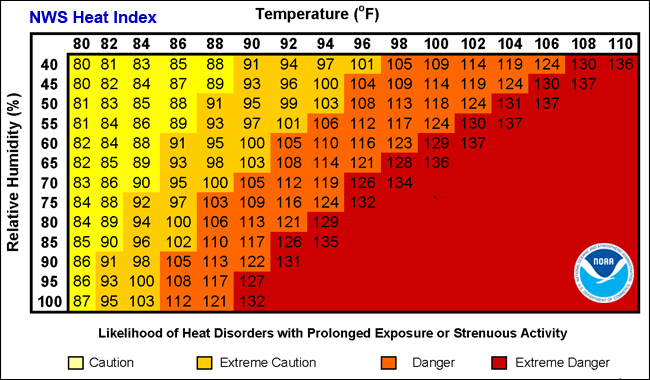
All indoor work areas where the temperature or heat index equals or exceeds 87 degrees Fahrenheit (F) when employees are present.  In workplaces where employees wear clothing (possible PPE) that restricts heat removal, the statute applies 82 degrees F. “Indoor” refers to a space that is under a ceiling or overhead covering and is enclosed along its entire perimeter by walls, doors, windows, dividers, or other physical barriers that restrict airflow. In automobile dealerships, most likely areas for this law to apply will be closed shops, parts warehouse etc..  Air-conditioned office and showroom space would be exempt.Temperature & Heat Index:  Temperature can be measured by a thermometer.  Heat Index is calculated based upon temperature and humidity.  In high humidity, sweat does not evaporate creating a dangerous condition for workers.  Heat index calculations require an instrument to read the humidity.  The humidity and the temperature reading are placed on the US Govt. chart on page 2 of this Newsletter and the heat index is calculated.  For example, if the temperature is 84F and the humidity is 70%, the Heat Index is 90 and hence the IHIPP kicks in.  This is above the action level of 87F as listed in para above, employer is now required to document actions as listed below.What is Wet Bulb Globe Temperature? (National Weather Service)  https://youtu.be/jstHHkm_6vQEMPLOYER ACTIONSMEASURE & KEEP RECORD of the greater of measured temperature and the calculated heat index as temperatures begin rising toward 80 F. Use the log attached.PROVIDE BREAK ROOM/COOL DOWN AREA:  The break room AC must operate below 82 F.  Cool, potable water is required when the temperature or heat index reaches 87 F indoors.TRAIN all supervisory and non- supervisory employees on Heat Illness Prevention.  Find the traning memo on the Elearn portal. CA Title 8 CCR 3395 (h)INCLUDE WRITTEN PROCEDURES for Indoor Heat Illness Prevention in the Heat Illness Prevention Plan (HIPP), Injury and Illness Prevention Plan (IIPP), or maintain separately.  The HIPP is available on the CSI Elearn platform under EHS documents. Please print it, add information as necessary, and save it with your HR Department. A copy can be emailed to elearn@cellyservices.com.

Note: Cal/OSHA’s outdoor heat illness prevention program at Title 8, Section 3395 has been in effect since 2015.

HEAT INDEX. Heat index is a measure of heat stress that combines relative humidity with air temperature to capture what the temperature feels like to the human body. When the body gets too hot, it begins to sweat to cool itself off.  If the sweat can’t evaporate, the body can’t regulate its temperature. High humidity limits sweat evaporation and prevents effective cooling of the body.

Maintain the Log

1.        Measure the temperature and humidity. Calculate the heat index. RECORD WHICHEVER IS GREATER on the log attached (when > 82 F). Use a shop thermometer to measure temperature in conjunction with an instrument called hygrometer to measure humidity to get the heat index. Alternately, buy an instrument that includes both temperature and humidity (ex: https://buythermopro.com/product/tp53/).

2.     Go to the National Oceanic and Atmospheric Administration (NOAA) website to calculate the heat index (https://www.wpc.ncep.noaa.gov/html/heatindex.shtml) or use the table below.

For example, the indoor thermometer reads 88 F and the hygrometer reads 75%. This means the heat index is 103 (from the NOAA heat index website or the table below). Simply put, it feels hotter due to the high humidity and this, the heat index, is the relevant measure to record.  Because 103 > 88 F, 103 should be recorded in the attached log. NOTE: Maximum temperatures are typically between 1PM and 5PM.

A chart of temperature

Description automatically generated

COMPARISON of INDOOR and OUTDOOR HEAT ILLNESS PREVENTION STANDARDS

RequirementOutdoor Heat (T8CCR 3395)Indoor Heat (T8CCR 3396)
Scope and ApplicationApplies to outdoor workplaces     Applies to indoor workplaces when the indoor temperature is greater than 82 F.     The heat index should be used to measure this temperature as it incorporates relative humidity to show how hot it feels to the human body.
Provide Clean Drinking Water     Provide access to potable water that is fresh, suitably cool, and free of charge.     Located as close as possible to work areas.     Provide access to potable water that is fresh, suitably cool, and free of charge.     Located as close as possible to work areas and cool-down areas.
Access to Shade and Cool-Down Areas     For outdoor workplaces, shade must be present when temperatures are greater than 80 F. When temperatures are less than 80 F, shade must be available upon request.     For indoor workplaces, provide access to at least one cool-down area, such as a break room, which must be kept at a temperature below 82 F using AC or other cooling methods.     Shade and cool-down areas must be:Blocked from direct sunlight.Large enough to accommodate the number of workers on rest breaks so they can sit comfortably without touching each other.Close as possible to the work areas.For indoor workplaces, the cool-down areas must be kept at less than 82 F and shielded from other high-radiant heat sources.
Cool-Down Rest Periods     Encourage workers to take preventative cool-down rest periods.     Allow workers who ask for a cool-down rest period to take one.     Monitor workers taking such rest periods for symptoms of heat-related illness.
High-Heat Procedures    Have and implement procedures to deal with heat when the temperature equals or exceeds 95 F.    Procedures must include:    Observing and communicating effectively with workers.    Reminding workers to drink water and take cool-down rest breaks.        Not applicable to Indoor Workplaces.
Assessment and Control Measures    Not applicable to Outdoor Workplaces.     As temperatures rise above 80F, measure indoor temperature and humidity. Calculate the heat index. If the temperature or heat index is at or above 87F, record whichever is greater of the temperature and heat index on the log attached.  Statute requirements kick-in.     (For workers in high-radiant-heat areas, or wear clothing that restricts heat removal, the temperature or heat index must be recorded when either reaches 82 F).     Implement control measures to keep workers safe. Feasible engineering controls must be implemented first.
Monitoring the WeatherMonitor outdoor temperature and ensure that once the temperature exceeds 80 F, shade structures will be opened and made available to the workers.When it is at least 95 F, implement high-heat procedures.Supervisors can use the OSHA-NIOSH heat index tool to quickly check heat index (outdoor).Train supervisors on how to check weather reports and how to respond to weather advisories.     For indoor workplaces that are affected by outdoor temperatures, train supervisors on how to check weather reports and how to respond to hot weather advisories.     Train supervisors on how to measure temperature and humidity and calculate the heat index. 
Emergency Response Procedures    Provide first aid or emergency response to any workers showing heat illness signs or symptoms, including contacting emergency medical services.
Acclimatization    Closely observe new workers and newly assigned workers working in hot areas during a 14-day acclimatization period, as well as all workers working during a heat wave.
Training    Employers must provide training to all employees—supervisory and non-supervisory.
Heat Illness Prevention Plan    Establish, implement, and maintain an effective written Outdoor Heat Illness Prevention Plan that includes procedures for providing drinking water, shade, preventative rest periods, close observation during acclimatization, high-heat procedures, training, prompt emergency response.     Establish, implement, and maintain an effective written Indoor Heat Illness Prevention Plan that includes procedures for providing drinking water, cool-down areas, preventative rest periods, close observation during acclimatization, assessment and measurement of heat, training, prompt emergency response, and feasible control measures.
CALL TO ACTION
Ice MachinesGet an ice machine for the employees in the employee lunchroom.
AC Break RoomsEnsure the air conditioning in the employee break room is running full tilt. Go and test it with a thermometer.
Cool Drinking WaterEnsure cool drinkable water is available. In extreme hot weather, management may augment with electrolyte rich drinks like Gatorade upon request.
Swamp Cooler + FansProvide swamp coolers in the shop area. Ensure all employees get a blast. Humid zones may need forced draft fans…see Big Ass Fans.
Neck GaitersProvide neck gaiters to each employee at no cost. Cost is between $5-10 at Amazon. Show them how to use it it’s easy. Golfers, construction and highway workers have been using it for a while.
Ice VestsProvide an option for outdoor employees to wear an ice vest. The vest is thrown in the freezer for a few hours then one round the waist like a bulletproof vest. Cost $49.99. Your staff walking outside in 100-degree heat will love you.
Employee TrainingProvide training to all employees regarding the signs and symptoms of, causes, first aid, and emergency responses to various heat illnesses.
Management GuidanceManagement and all employees must understand the signs and symptoms of, and first aid and emergency responses to heat illness. OSHA provides this guidance for employers knowing that an MD is generally not available on site to diagnose, treat, or respond to heat related illness.  https://www.cdc.gov/niosh/topics/heatstress/heatapp.html
PostersPost this poster in employee breakrooms and near the receptionist.
ThermometerPlace a big thermometer (patio thermometer size) in the indoor area for all to see.


References

California Code of Regulations, Title 8, Section 3396

California Code of Regulations, Title 8, Section 3395

https://www.weather.gov/ama/heatindex
https://www.cdc.gov/niosh/topics/heatstress/heatapp.html for the OSHA-NIOSH Heat Safety tool for mobile phones to estimate “Feels Like” temperature

Remembering Tim: A life Lost to Heat Illness at Work (US Department of Labor)  https://youtu.be/o3ULhPd0KQg  

What is Wet Bulb Globe Temperature? (National Weather Service)  https://youtu.be/jstHHkm_6vQ

Attachments

Heat Illness Prevention Training for Employees (English and Spanish) Monthly Safety Topic, May 2025

Employee Training Acknowledgement Sheet

Heat Index Log

Prevent Heat Illness at Work OSHA Poster

Stopping for Water Keeps You Going OSHA Poster

How to Handle an OSHA Inspection

celly services letterhead topper

To:           Environmental Health and Safety Coordinator

From:      Sam Celly, BChE MChE JD CSP

Ref:         How to Handle an OSHA Inspection

Date:       April 8, 2025

HOW TO HANDLE AN OSHA INSPECTION

Inspections are always conducted without advance notice.  OSHA conducts inspections of workplaces when they receive a complaint of workplace safety or health hazard or report of a fatality or serious work-related injury or illness. Employers and fire and police departments are required to report such serious accidents to OSHA. OSHA may also conduct targeted inspections without a complaint or accident report, or whenever the inspector sees a workplace hazard in plain view. However, there are special circumstances under which OSHA may give notice to the employer, but such notice will normally be less than 24 hours. These circumstances include the following:

  • Inspections due to imminent situations that are dangerous and require immediate correction.
  • Accident investigations where the employer has notified an agency of a fatality or catastrophe.
  • Inspections that must take place after regular business hours or that require special preparation.
  • Cases where notice is required to ensure that the employer and employee representative or other personnel will be present.
  • Cases where aninspection must be delayed for more than 5 working days for good cause.
  • Situations in which the OSHA Area Director determines that advance notice would produce a more thorough or effective inspection. Employers who receive advance notice of aninspection must inform their employees’ representative or arrange for OSHAto do so. In certain circumstances, the employer may demand a search warrant (See US Constitution Fourth Amendment). In high stakes cases where fatality or an amputation is involved, the dealership should seek help of legal counsel and may have their lawyer present during the inspection.

Note 1. As a matter of policy, a 20-minute wait for the OSHA inspector prior to the inspection process is considered acceptable.  Management can alert all responsible managers on the premises about OSHA’s presence and possible involvement in the inspection process.

Note 2. Search warrants for dealers have been an exception rather than the rule. We recommend that the warrant policy be decided ahead of time rather than bringing it up upon arrival of the inspector. Once knowledgeable consent has been given to the inspector, the warrant requirement is considered to have been waived by the employer. Warrants are issued upon probable cause and are limited in scope as to the nature of the complaint against the employer.

OSHA’s INSPECTION PRIORITIES

Imminent Danger. Imminent danger situations receive top priority. An imminent danger is any condition where there is reasonable certainty that a danger exists that can be expected to cause death or serious physical harm immediately or before the danger can be eliminated through normal enforcement procedures. If a compliance officer finds an imminent danger situation, he or she will ask the employer to voluntarily abate the hazard and remove endangered employees from exposure. Should the employer fail to do this, OSHA, through the regional solicitor, may apply to the Federal District Court for an injunction prohibiting further work as unsafe conditions exist.

Serious Injuries and Fatal Accidents. Second priority goes to the investigation of fatalities and accidents resulting in a death or hospitalization.  California has a penalty of $5000 for failure to report within an 8-hour time frame including accidents that occurred on a weekend.  Reportable incidents in California include fatality, any in-patient hospitalization for work related injury or illness, amputation, loss of an eye, or any serious degree of permanent disfigurement.  Federal regulations require that fatalities be reported within 8 hours and in-patient hospitalization, amputation, or eye loss reported within 24 hours.

Complaints and Referrals. Third priority goes to formal employee complaints of unsafe or unhealthful working conditions and to referrals from any source about a workplace hazard. The OSHA Act gives each employee the right to request an OSHA inspection when the employee believes he or she is in imminent danger from a hazard or when he or she thinks that there is a violation of an OSHA standard that threatens physical well-being. OSHA will maintain confidentiality if requested and inform the employee of any action it takes regarding complaints. In certain cases, it may issue a letter requiring the employer to provide proof of compliance. These letters must be replied to OSHA expeditiously with support documents indicating compliance.

Programmed Inspections. Next priorities are programmed inspections aimed at specific high-hazard industries, workplaces, occupations, health substances, or other industries identified in OSHA’s current inspection procedures. OSHA selects industries for inspection based on factors such as injury incidence rates, previous citation history, employee exposure to toxic substances, or random selection. California requires that employers with Workers Compensation Insurance Experience Modification Rate (“X-Mod” or “EMR”) of 125% or higher receive programmed OSHA inspections.

Follow-up Inspections. A follow-up inspection determines if the employer has corrected previously cited violations. If an employer has failed to abate a violation, the compliance officer informs the employer that he or she is subject to “Failure to Abate” alleged violations. This involves proposed additional daily penalties until the employer corrects the violation.

WHAT DOES THE INSPECTION PROCESS INVOLVE?

Inspectors’ Credentials. When the OSHA compliance officer(s) arrive(s) at the establishment, he or she displays official credentials and asks to meet an appropriate employer representative. Employers should always ask to see the compliance officer’s credentials. Employers may verify the OSHA federal or state compliance officer credentials by calling the nearest federal or state OSHA office

Opening Conference. The compliance officer explains the purpose of the visit, how/why the establishment was selected and the likely scope of the inspection, and the standards that apply. Take notes. The compliance officer asks the employer to select an employer representative to accompany the compliance officer during the inspection. This person must stay with the inspector until departure from the company premises.

Limitation on OSHA Inspections. OSHA has limitations on inspection authority when visiting a place of employment. OSHA officers may try to expand the scope of inspection during the visit and, only upon informed consent, may proceed to collect evidence that can significantly increase the violations detected and related penalties. Therefore, it is critical that the employer provide OSHA access only to the location that is related to the underlying cause of inspection.  Such boundaries must be established during the opening conference with the OSHA officer.

In a recent case, the US Court of Appeals limited the scope of inspection available to OSHA.  The case involved an employee who was injured while repairing an electrical panel. The employee was hospitalized, triggering a report to OSHA under federal regulations. OSHA inspected the facility and was granted access by the employer to look at the electrical panel area. Upon request, OSHA inspectors were provided with Injury Log 300 by the employer. Upon review of Log 300, OSHA filed for a search warrant to investigate other locations at the plant where the injuries as reported on Log 300 had occurred. The search warrant was granted.

The employer filed a motion to vacate the search warrant which was granted by the District Court. OSHA appealed the lower court’s decision to the 11th Circuit Court of Appeals. The court’s appeals held that logs are merely records of injuries and not proof of OSHA violations. The mere existence of injuries, the court noted in this case, does not mean that injuries were caused by OSHA violations, nor do they justify the issuance of administrative warrant for gathering evidence of OSHA violations. Recordkeeping regulations as found in 29 CFR Part 1904 state that the recording of injuries on Log 300 does not mean that an employer is at fault or that an OSHA violation has occurred. This decision serves as guidance to employers to limit OSHA inspections to the complaint area. Unless the employer consents, a judicial warrant is required under the Fourth Amendment. If OSHA wishes to expand its search under information procured during initial inspection, the employer should seek legal counsel to limit the inspection as available under the current law. See USA v. Mar-Jac Poultry, Inc., No. 16-17745 (11th Cir. 2018).

Walk-Through. Do not allow the inspector to veer in a direction not agreed in the scope at the opening conference! The compliance officer will observe safety, health conditions, practices; if necessary, take photos, videotapes, and/or instrument readings, examine records; collect air samples; measure noise levels; survey existing engineering controls; and monitor employee exposure to toxic fumes, gases, and dust. Be sure to take split samples for independent analysis from the inspector at the end of the walkthrough.

If the compliance officer finds a violation in open view, called the “plain view exception,” the scope of inspection now incorporates the plain view observation. The employer may shut down the area of the shop where the inspector will walk through.  The compliance officer may wish to interview employees to get their opinion on the workplace accident.  Allow consultation with available employees and employee representatives for the short time that they have available during their work shift (See, for representation, https://www.dol.gov/newsroom/releases/osha/osha20240329). If the officer demands a longer interview process, then the interviews may have to be scheduled after the work hours. In our experience, this rarely happens, i.e., the inspector does not wait beyond 5PM to complete the inspection.

During the inspection, the compliance officer will point out any unsafe or unhealthy working conditions observed. At the same time, the compliance officer will discuss possible corrective actions, if the employer desires. Some apparent violations detected by the compliance officer can be corrected immediately. When the employer corrects them on the spot, the compliance officer records such corrections to help in judging the employer’s good faith in compliance. OSHA may reduce the penalties for some types of violations if they are corrected immediately.

Closing Conference. At the conclusion of the inspection, the compliance officer conducts a closing conference with the employer.  The compliance officer gives the employer, and all other parties involved a copy of Employer Rights and Responsibilities Following an OSHA Inspection for their review and discussion. The compliance officer discusses with the employer all unsafe or unhealthy conditions observed during the inspection and indicates all apparent violations for which he or she may issue or recommend a citation and a proposed penalty. The compliance officer will inform the employer of appeal rights and request documents related to the inspection be mailed to OSHA within a specified time.  Prior to submission, discuss the documents with your counsel.  Documents may be held back for reasons of privacy or relevance.  https://www.dir.ca.gov/doshpol/Document_Request1AY_072308.pdf

CITATIONS & PENALTIES

Citations. OSHA citations inform the employer and employees of the regulations and standards alleged to have been violated, along with the proposed time frame for correcting those violations. These citations are sent by certified mail and must be posted at or near the location of the violation for three days or until the violation is abated, whichever is longer.

To appeal an OSHA citation, the employer has 15 working days from the date of receipt to file a written notice of intent to contest with the local OSHA office manager. Failure to file a timely appeal results in the citations becoming permanent, with limited recourse available to the employer.

Penalties

Type of ViolationPenalty (per violation)
SeriousOther-Than-SeriousPosting Requirements$16,550
Failure to Abate$16,550 per day beyond abatement date
Willful or Repeated$165,514
Falsification of Records$10,000 or up to 6 months imprisonment, or both
Obstructing Officers$5,000 and up to 3 years imprisonment

Sources

What to expect: https://www.dir.ca.gov/dosh/dosh_publications/What-to-expect-from-inspection.pdf
For Inspections, Citations, and Penalties: https://www.osha.gov/laws-regs/regulations/standardnumber/1903/1903.16
Employers Rights: https://www.osha.gov/sites/default/files/publications/osha3000.pdf.  

Penalties for False Statements: https://www.osha.gov/sites/default/files/publications/OSHA4157.pdf
Penalties: https://www.osha.gov/penalties

OSHA violations are public information.  You can search violations against any employer on OSHA website: https://www.osha.gov/ords/imis/establishment.html.

DISCLAIMER: The contents of this newsletter are merely for informational purposes only and are not to be considered as legal advice Employers must consult their lawyer for legal matters and EPA/OSHA consultants for matters related to Environmental, Health & Safety. The article was authored by Sam Celly of Celly Services, Inc. who has been helping automobile dealers comply with EPA and OSHA regulations since 1987.  Sam received his BE (1984) and MS (1986) in Chemical Engineering, followed by a J.D. from Southwestern University School of Law (1997).  Our newsletters can be accessed at www.epaoshablog.com.  Your comments/questions are always welcome.  Please send them to sam@cellyservices.com.

Generator Improvement Rule (GIR) Requirements (California ONLY)

New regulations require California Haz Waste generators to report critical waste related information to regulatory agencies including first responders.  The requirements are: Add Quick Reference Guide to annual CERS: CSI will complete on your behalf.Label hazards on hazardous waste containers: Your haz waste hauler will provide them.Provide 3 emergency response contacts: Complete attached doc. Email to us ASAP.

Introduction

The California Department of Toxic Substance Control (DTSC) has adopted the federal Generator Improvements Rule (GIR) to provide additional environmental protections and to gain swift access to critical facility information. Generally, the GIR applies to all businesses who generate hazardous waste, regardless of the waste quantity generated. GIR requires the submission of a Quick Reference Guide (QRG) that contains three emergency contacts, waste generated onsite, and facility maps with special requirements (Large Quantity Generators only).  See definitions on page 2.

California Environmental Reporting System (CERS) requires all businesses that handle hazardous materials in quantities equal to or greater than 55 gallons of liquids, 500 pounds of solids, or 200 cubic feet of gas at standard temperature and pressure or quantities of extremely hazardous substances above the threshold planning quantity to:

  • Inventory their hazardous materials,
  • Develop a site map,
  • Develop an emergency plan,
  • Implement a training program for employees, and
  • Submit a CERS report annually.

The CERS annual report includes: Business owner/operator details, hazardous materials and waste inventory matrix, facility identification and operations overview, emergency communication phone number, notifications emergency containment, cleanup procedures, facility evaluation, and arrangement of emergency services, emergency equipment, earthquake vulnerability, employee training details and list of other attachments.  The attachments this year include the GIR.

GIR Hazardous Waste Labeling and Marking Requirement

Key GIR requirements for labeling and recordkeeping of hazardous waste tanks/containers are:

  1. Generators must mark or label their tanks with an indication of the hazards of the contents.  Labels from DOT OR OSHA Haz-Com OR NFPA are acceptable.

Your waste hauler may provide warning labels for waste tanks.

Example of NFPA labels:
Used Oil Placard:  
Used Coolant Placard:
Some sources to buy NFPA labels: NFPA Used Oil Label Blank NFPA Diamond Label  
  • Generators must use inventory logs, monitoring equipment, or other records to demonstrate that hazardous waste has been emptied within the applicable time period of first entering the tank/container. Your waste haulers will provide labels highlighting dates of accumulation. Dealers must ensure hazardous waste is not stored past the applicable time period. Contact waste hauler if labels are missing or past the storage time limit.
  • Generators must keep inventory logs or records on site and readily available for inspection. Pick-up receipts/manifests related to environmental matters must be kept in Black Box provided by Celly Services for ready access when the facility is inspected.
WHAT WE NEED FROM YOU RIGHT AWAY Names of three emergency coordinators and a 7-day/24-hour emergency telephone number.
Please use the attached form to provide names and numbers for your dealership. Note on how to select emergency contacts for your facility. The contacts should: Have knowledge of the location and type of haz wastes and haz materials.Have managerial level decision making capability.Live relatively close by in order to respond to an after-hour emergency quickly.

Large Quantity Generator (LQG): “Generators of 1,000 kg or more of hazardous waste per calendar month (excluding universal wastes).” About a total of 300 gallons/month of used oil, used coolant etc. will place you above the 1,000 kg threshold. Small Quantity Generators generate less than 1,000 kg of hazardous waste/mo.

Ref: Frequently Asked Questions for the Adoption of Generator Improvements Rule (GIR) in California | Department of Toxic Substances Control

CERS Portal

DISCLAIMER: The contents of this newsletter are for informational purposes only and are not to be considered as legal advice. Employers must consult their lawyer for legal matters and EPA/OSHA consultants for matters related to Environmental, Health & Safety. The article was authored by Sam Celly of Celly Services, Inc. who has been helping automobile dealers in Arizona, California, Hawaii, Idaho, Nevada, New Mexico, New York, Texas, and Virginia comply with EPA and OSHA regulations for over 35 years. Sam is a Certified Safety Professional (No. 16515) certified by the National Board of Certified Safety Professionals. Sam received his BE (1984) and MS (1986) in Chemical Engineering, followed by a J.D. from Southwestern University School of Law (1997). Sam is a member of the American Chemical Society (No. 31176063), American Industrial Hygiene Association (No. 124715), and National Association of Dealer Counsel (NADC). Sam also serves on the Board of Orange County American Industrial Hygiene Association and on CA Industrial Hygiene Council (CIHC). Our newsletters can be accessed at www.epaoshablog.com. Your comments/questions are always welcome. Please send them to sam@cellyservices.com.

COMPLETE THE FORM BELOW AND EMAIL TO SUPPORT@CELLYSERVICES.COM
Facility Name ______________________________________________________________________________  
Street Address _____________________________________________________________________________  
City, State, Zip _____________________________________________________________________________  
NOTE 1: How to select emergency contacts for your facility.  The contacts should: Have knowledge of the location and type of haz waste and haz material.Have managerial level decision making capabilityLive relatively close by to respond to an after-hour emergency quickly NOTE 2: Following guidance in Note 1 above, preferably select your Service Manager, Parts Manager, and General Manager.  For bigger stores or multiple dealerships select your Director of Fixed Operations.

Facility Emergency Contacts: Primary Emergency Coordinator:
Name: _____________________________________________________
Title: _____________________________________________________
24/7 Emergency Phone Number: _____________________________________________________
Email: _____________________________________________________

Secondary Emergency Coordinator and phone number:
Name: _____________________________________________________
Title: _____________________________________________________
24/7 Emergency Phone Number: _____________________________________________________
Email: _____________________________________________________

Tertiary Emergency Coordinator and phone number:
Name: _____________________________________________________
Title: _____________________________________________________
24/7 Emergency Phone Number: _____________________________________________________
Email: _____________________________________________________

Important: Facility contacts must be updated within 30 days when there is a change. Email your Celly Services representative with the updated Facility Contact list.

Top 10 OSHA Citations and Injuries for Automobile Dealerships

IN THIS NEWSLETTER WE DISCUSS:
1.      Top 10 OSHA Citations for Automobile Dealerships
2.      Common Injuries at Automobile Dealerships
3.      Increases in OSHA Penalties

TOP 10 OSHA CITATIONS FOR AUTO DEALERS (OCTOBER 2023 – SEPTEMBER 2024)

 CitationInfraction
1Hazard CommunicationEmployers are required to provide a written Hazard Communication Program, label hazardous chemicals, provide a Safety Data Sheet for each chemical, and document employee training.
2Power industrial trucksThe high number of fatalities associated with forklifts and high number of violations associated with powered industrial trucks tell us that many workers are not properly trained to safely drive potentially hazardous equipment. OSHA compliance requires training in these specific activities: forklift operations, loading and unloading, and vehicle maintenance. Evaluating each operator every three years is also mandatory.
3OSH Act General DutyEach employer: shall furnish to each of his employees employment and a place of employment which are free from recognized hazards that are causing or are likely to cause death or serious physical harm to his employees;shall comply with occupational safety and health standards promulgated under this Act.   Ref: OSHA’s General Duty Clause
4Wiring methods, components, and equipment for general useThis regulation covers the general requirements for wiring methods, including the use of flexible cords and cables as permanent wiring. This also includes failure to remove nonconductive coatings from contact points (i.e. brake wash drums). These infractions can lead to serious electrical hazards, including electric shock, fire, and equipment damage. Ref: 29 CFR1910.305
5Duty to have fall protection and falling object protectionWork-related fatalities due to slips, trips, and falls accounted for 865 fatalities in 2022. Any time a worker is at a height of 4 feet or more (in California the requirement is 30 inches or more), the worker is at risk and needs to be protected. Dealerships must protect employees working on 2nd floor of the parts department, especially while loading and unloading parts at the mezzanine edge.
6Maintenance, safeguards, and operational features for exit routesAuto dealers must ensure exit routes are free and unobstructed from materials at all times. All exit routes must be lighted and clearly marked with a sign reading “Exit.” Safeguards such as alarm systems, sprinkler systems, fire doors, and exit lights must be maintained and operational at all times.Ref: 29 CFR 1910.37
7Respiratory Protection                                   Body shop employees need specific training both on written policies and on practices involving the use of respirators during auto refinishing operations. Training for respiratory protection, fit testing, user seal check, and respiratory cleaning procedures is mandatory, as is the OSHA Respirator Medical Evaluation Questionnaire. When an employee wears a respirator, information on proper usage, including limitations, must be provided even when it is not required under the regulation.
8Abrasive wheel machineryMoving machine parts have the potential to cause severe workplace injuries such as crushed fingers or hands, amputations, burns, or blindness. Safeguards, including anchoring machinery, are essential for protecting workers from these preventable injuries. Any machine part, function, or process that may cause injury must be safeguarded. When machine operation or accidental contact with the machine may injure the operator or others in the vicinity, hazards must be eliminated or controlled. Moving parts in automobiles, grinders, and brake lathes are all subject to this regulation.
9Medical services and first aidAuto dealers have inherent dangers associated with car repairs that can lead to negative health outcomes. Some minor, some major. This regulation requires employers to have adequate first aid kits for the worksite and access to medical facilities (clinic, hospitals, etc.) when warranted to reduce the negative health outcomes. Ref: 29 CFR 1910.151
10Handling materials – generalAssociated infractions for such citations include: obstructed aisles and passageways, insecure storage, poor housekeeping, lack of clearance signs, unprotected openings, and improper use of mechanical equipment. Ref: 29 CFR 1910.176
COMPLETE OSHA TRAINING ON THE WEB AT YOUR OWN PERIL
OSHA has stated repeatedly and consistently in its training-related interpretation letters that online or computer-based training is acceptable as part of an overall training program that includes hands-on, site-specific information and work practices where it is needed to meet workplace safety goals.  Many online courses may not be legitimate. In many instances, the training company clearly states that the training does not meet any local, state, or federal standards. The awakening happens when OSHA audits the workplace and finds the employer lacking in hands-on, site-specific information and work practices.

COMMON INJURIES AT AUTOMOBILE DEALERSHIPS

  • Burns: Hot engines, exhaust pipes, and welding equipment can cause burns. To prevent burns, you can provide heat-resistant gloves and clothing, require work boots, and be careful around hot surfaces. 
  • Muscle sprains and strains: Working with heavy objects can overstretch or tear muscles and tendons. This can happen due to overuse, fatigue, or improper lifting technique. 
  • Eye damage: Welding and grinding can expose mechanics to flying debris, sparks, and toxic chemicals. This can cause scratches, redness, irritation, and in severe cases, blindness.
  • Falls: Falls from heights, slip and falls, and falls on uneven or slippery surfaces can occur.
  • Getting caught in machinery: Hands or loose clothing can get caught in machinery.
  • Repetitive motion injuries: Repetitive motion injuries can occur.
  • Back injuries: Working at odd angles for long periods can lead to chronic back pain.
  • Exposure to hazardous chemicals and materials: Solvents, asbestos, engine exhaust, welding fume, paint spray, cleaning products, and dust from sanding or abrasive blasting can be hazardous. 

OSHA PENALTIES*

Type of ViolationPenalty
Other-Than-Serious$16,550 per violation
Serious$16,550 violation
Failure to Abate$16,550 per day beyond abatement date
Posting Requirements$16,550 per violation
Willful or Repeated$165,514 per violation

*Note: The penalties are automatically adjusted for inflation on an annual basis and based on the number of employees. Table above reflects penalty amounts as of 1/7/2025

Ref: Frequently Cited OSHA Standards NAICS Code 441DISCLAIMER: The contents of this newsletter are for informational purposes only and are not to be considered legal advice. Employers must consult their lawyer for legal matters and EPA/OSHA consultants for matters related to Environmental, Health & Safety. The article was authored by Sam Celly of Celly Services, Inc. who has been helping automobile dealers in Arizona, California, Hawaii, Idaho, Nevada, New Mexico, New York, Texas, and Virginia comply with EPA and OSHA regulations for over 35 years. Sam is a Certified Safety Professional (No. 16515) certified by the National Board of Certified Safety Professionals. Sam received his BE (1984) and MS (1986) in Chemical Engineering, followed by a J.D. from Southwestern University School of Law (1997). Sam is a member of the American Chemical Society (No. 31176063), American Industrial Hygiene Association (No. 124715), and National Association of Dealer Counsel (NADC). Sam also serves on the Board of Orange County American Industrial Hygiene Association and on CA Industrial Hygiene Council (CIHC). Our newsletters can be accessed at www.epaoshablog.com. We welcome your comments/questions. Please send them to sam@cellyservices.com
EPA e-Manifest Registration The Time to go Electronic is NOW

DEALER ALERT

TO:                  Environmental, Health and Safety (EHS) Coordinator

FROM:             Sam Celly, BChE MChE, JD CSP

SUBJECT:        EPA e-Manifest Registration The Time to go Electronic is NOW

DATE:              January 20, 2025

Background: Congress enacted the Resource Conservation and Recovery Act (RCRA) in 1976 that created a cradle-to-grave liability for generators as related to disposal of hazardous wastes.  The generator is liable for disposal of hazardous wastes from the time they are generated until they are finally disposed of/recycled.  Liability for cleanup of environment damages from illegal disposal flows to the generator.  A Hazardous Waste Manifest System ( Manifest ) was created to track the shipment of hazardous wastes from generators to off-site Treatment, Storage or Disposal Facilities (TSDFs). 

The manifest consisting of 6 NCR sheets is pesky and time consuming.  To make it worse, it is seldom adhered to, creating liability for the generators in case of an audit.  For decades, the courier industry has been picking up and delivering billions of packets with a paperless record keeping process.  In 2012, Congress enacted the Hazardous Waste Electronic Manifest Establishment Act, making the manifest a paperless process. 

Twelve years later, the paperless manifest is a reality.  Life should become easier for all generators with e-manifest, especially in California where many wastes are subject to manifest process whereas dealers in other states may not have any wastes subject to manifest process.  Manifest is a mechanism for the generator, hauler, and waste processing facility.  Generators should task a manager to complete the e-manifest process as listed below.

Who Must Register for e-Manifesting?

        Large Quantity Generators (LQGs) More than 1000kg of hazardous waste in a month

        Small Quantity Generators (SQGs) Less than 1000kg of hazardous waste in a month

By when? Register by January 22, 2025

Practically, all automotive dealers, whether classified as LQGs or SQGs, must register before January 22, 2025.

How to Register for e-Manifest

1.      Register for an industry user account in RCRAInfo.

  1. Confirm your location has an EPA ID (site ID) number EPA ID numbers can be located on repair orders or at the top of Celly Services, Inc. Compliance Reports.
  2. Assign a Site Manager for your EPA ID. EPA encourages each EPA ID to register at least two Site Managers before registering for any other permission levels.
  • A Site Manager has special permission. In addition to having permission to view, edit, create, and sign manifests and manifest-related reports, Site Managers also administer permissions for other users in their organization.
  • Register additional users for e-Manifest permissions in RCRAInfo.

ACTION NEEDED TO REGISTER FOR E-MANIFEST NOW
Scan QR code to register for an account with the EPA s e-Manifest system

Registration is mandatory for all SQGs and LQGs effective Jan. 22, 2025

Paper Manifest. Under the 6-page paper system, the hauler brings the manifest duly completed to the generator. The Generator verifies all information on the manifest. Any inaccuracy on the manifest brings liability to the generator. The federal and California manifests are the same. California has more taxes on hazardous wastes generated including some complicated reporting requirements for large generators. The good news is that only some of the wastes dealers produce need a manifest.  See CSI s 2018 newsletter Transformation of the Haz Waste Manifest From the Stone Age to the Modern Age

Hybrid Manifest. A paper/electronic manifest is a specific manifest approach that to assist generators who are not able to fully participate in electronic manifesting. The hybrid manifest allows transporters to initiate an electronic manifest in e-Manifest and use this manifest with their non-participating generator customers. The initial transporter may print a copy of the electronic manifest for the generator, and the generator may sign the paper copy, obtain the initial transporter’s ink signature on this paper copy, and then retain this paper copy on-site as the generator’s initial manifest copy as is done under traditional manifest requirements. Thereafter, the initial transporter and subsequent waste handlers complete the remainder of the tracking of the shipment electronically in e-Manifest with electronic signatures and electronic transmissions to the system. Hybrid manifests are charged the same fee as a fully electronic manifest.

DISCLAIMER: The contents of this newsletter are for informational purposes only and are not to be considered legal advice. Employers must consult their lawyer for legal matters and EPA/OSHA consultants for matters related to Environmental, Health & Safety. The article was authored by Sam Celly of Celly Services, Inc. who has been helping automobile dealers in Arizona, California, Hawaii, Idaho, Nevada, New Mexico, New York, Texas, and Virginia comply with EPA and OSHA regulations for over 35 years. Sam is a Certified Safety Professional (No. 16515) certified by the National Board of Certified Safety Professionals. Sam received his BE (1984) and MS (1986) in Chemical Engineering, followed by a J.D. from Southwestern University School of Law (1997). Sam is a member of the American Chemical Society (No. 31176063), American Industrial Hygiene Association (No. 124715), and National Association of Dealer Counsel (NADC). Sam also serves on the Board of Orange County American Industrial Hygiene Association and on CA Industrial Hygiene Council (CIHC). Our newsletters can be accessed at www.epaoshablog.com. We welcome your comments/questions. Please send them to sam@cellyservices.com.

CA HAZARDOUS WASTE GENERATION & HANDLING FEE

Effective January 1, 2022, the hazardous waste generation and handling (GH) fee is imposed as a flat rate per ton or fraction of a ton on generators of hazardous waste for each generator site that generates five or more tons of hazardous waste at a site in California within a calendar year. 

What Changed: Before January 1, 2022, this was called Generator Fee. New legislation, Senate Bill 158, was written to simplify the fee structure and rename the fee to Hazardous Waste Generator & Handling fee. In the new fee structure, used oil that was earlier exempt from the fee was now subject to fee. With the omission of the line that took out exemption for used oil from fee structure, almost every auto dealer in the state of California became subject to the fee. Other wastes listed below were already subject to the fee and continue to do so.  Some dealers who were below the threshold of 5 tons (10,000 lbs) or roughly 1350 gallons of waste are now subject to the fee.

Hazardous wastes typically generated at an automobile dealership and subject to this fee are:

·   Recycled hazardous waste
·   Non-manifested universal waste
·   Waste sent outside California for disposal
·   Used motor oil (Except used oil collected
from the public. See note below)
·  Waste coolant (CA code 134),
·  Oily water (CA Code 223), and
·   Waste paper filters (CA code 352 or 223)
·  Waste brake fluid
·   Contaminated fuel 

If you are punching or crushing metal oil filters, under the Department of Toxic Substances Control (DTSC) guidelines you can dispose of them as scrap metal (through your hazardous waste hauler) and hence not be subject to this fee. If you decide to dispose of used metal oil filters as hazardous waste, those metal filters get added to your hazardous waste tonnage calculations. 

Don’t have a GH account?

The following should be completed to obtain a GH account number:

  1. Log into your CDTFA account and select “Register a New Business Activity.”
  2. Check off the box that says “. . . generates 5 or more tons of hazardous waste in a calendar year.”
  3. Answer all the other required questions as prompted. You will need your EPA ID number and start date of waste generation (place January 1, 2021 if you have generated waste for longer than 3 years).
  4. If you have any questions regarding the registration, please contact reps at CDTFA as follows: Thomas, Cathie Cathie.Thomas@cdtfa.ca.gov, Kevin McCarley Kevin.McCarley@cdtfa.ca.gov,
    Yatoba Godina Yatoba.Godina@cdtfa.ca.gov or 800-400-7115.

GH FEES & FEE RETURNS: HOW CALCULATED & WHEN DUE

The GH fee is calculated based on the total weight (measured in tons) of hazardous waste generated (produced or caused to be managed) from each site each calendar year. It is generally due regardless of the waste’s final disposition. Every generator that produces five tons or more of hazardous waste will pay the California Department of Toxic Substances Control (CDTFA) a GH Fee for each generator site for each calendar year, or portion thereof. Generators are required to report the amount of waste generated on a hazardous waste Generation and Handling Fee Return provided by CDTFA. Keep proper records to support tonnage of hazardous waste generated and handled at each site/location.

Don’t know your tonnage?

Please contact your dedicated waste hauler(s) to determine total tonnage. Once determined, please register online with CDTFA and complete the fee process. You are required to file your GH Fee Return electronically through the CDTFA online servicesMaintain support documentation of fee completion for your records. Finally, we note that this is a tax/fee matter and you must consult your tax consultant on calculations and record retention requirements.

GH fee payments and GH fee returns are both due by February 28 each year. The fee is calculated based on waste generated in the prior calendar year. (HSC 25205.5).  All GH fees are due according to the schedule in the table below, along with the GH Fee rates in 2024-25 for hazardous waste generated in Calendar Year 2023.

Note 1: Beginning with FY 2024-25, the Board shall adjust the GH Fee for changes to the Consumer Price Index (CPI).

Note 2: Please contact your waste hauler(s) for technical guidance on conversion of gallons of waste to tons.
For example, 1 gallon of used oil is approximately 7.4 pounds. 10,000 gallons is 74,000 pounds. 2,000 pounds equals one ton.

74,000/2,000 = 37 tons.  In summary, 10,000 gallons of used motor oil weighs approximately 37 tons!
Note 3: GH Fees do not apply to used oil collected from the public by certified used oil collection centers.

Return Reporting PeriodReport Based on Hazardous Waste Generated in Prior Reporting PeriodPrepayment Due DateReturn & Final Payment Due Date
Fiscal Year 2024 – 2025 (July 1, 2024 – June 30, 2025)Calendar Year 2023November 30, 2024February 28, 2025
Fiscal Year 2025 – 2026 (July 1, 2025 – June 30, 2026)Calendar Year 2024November 30, 2025February 28, 2026
Fiscal Year 2026 – 2027 (July 1, 2026 – June 30, 2027)Calendar Year 2025November 30, 2026February 28, 2027

Helpful Resources Online
California Department of Toxic Substances Control
CDTFA’s Hazardous Substances (Waste) Fee Guide
DTSC’s Manifest webpage
DTSC Fee Summary webpage
Law on Generation and Handling (GH) fee. Senate Bill 158; Stats. 2021, ch.73.
State of California December 2021 Notice. Hazardous Waste Generation and Handling Fee – Application of Fee, Payments, and New Rate Effective January 1, 2022
State of California August 2022 Special Notice on Filing requirements. L-863, Hazardous Waste Generation and Handling Fee Program Reminders and Online Filing Requirement).
State of California Guidance on the SB158 GH Fees. DTSC Generator Fee site.

DISCLAIMER: The contents of this newsletter are for informational purposes only and are not to be considered legal advice. Employers must consult their lawyer for legal matters and EPA/OSHA consultants for matters related to Environmental, Health & Safety. The article was authored by Sam Celly of Celly Services, Inc. who has been helping automobile dealers in Arizona, California, Hawaii, Idaho, Nevada, New Mexico, New York, Texas, and Virginia comply with EPA and OSHA regulations for over 35 years. Sam is a Certified Safety Professional (No. 16515) certified by the National Board of Certified Safety Professionals. Sam received his BE (1984) and MS (1986) in Chemical Engineering, followed by a J.D. from Southwestern University School of Law (1997). Sam is a member of the American Chemical Society (No. 31176063), American Industrial Hygiene Association (No. 124715), and National Association of Dealer Counsel (NADC). Sam also serves on the Board of Orange County American Industrial Hygiene Association and on CA Industrial Hygiene Council (CIHC). Our newsletters can be accessed at www.epaoshablog.com. We welcome your comments/questions. Please send them to sam@cellyservices.com