County (CUPA) Inspector is Coming – Are You Ready? (California Only)

Background: In 1993, CalEPA created the Certified Unified Program Agency (CUPA) which is a local agency certified by CalEPA to implement and enforce six state hazardous waste and hazardous materials regulatory management programs. CUPA inspectors enforce hazardous waste, storage tank, and emergency preparedness regulations amongst others. In our observation, the enforcement level varies from county to county and even inspector to inspector, however, the level of enforcement is up significantly with many paying penalties for violations.

We discuss some recent CUPA violations issued via a Notice of Violations (NOV) in this Newsletter. Needless to say, any NOV issued must be abated within the stipulated time and the county inspector informed in writing. As part of preparation for the annual CUPA inspector visit, we have noted some common CUPA violations in this Newsletter. We will discuss this Newsletter during our visit to clients as well. Dealership management must go through the listed items below and undertake remedial steps. 

I. California Environmental Reporting System (CERS)

All facilities with hazmat in excess of 55 gallons, or 200 cu. ft. of compressed gas, must report hazmat on CERS (state portal) and update annually. This reporting is similar to the federal Tier II reporting requirements but more expansive. CERS includes items as follows:

  1. Inventory, facility maps, and the emergency contact list with cell number to respond to a hazmat emergency including after hours. Preferably the contacts must be aware of hazmat and its location on the lot. Contact living close is preferrable as well.
  2. Maintain copy of CERS plan and ensure all managers have read the plan and know it’s location. 
  3. Train employees on emergency response plan (CERS report) and seek written acknowledgement from employees. CERS requires extensive training to the entire shop staff and management team. In Section VII and VIII below, we provide a framework of training requirements. Please contact your consultant for detailed training requirements for CERS.
  4. Train employees on spill response and provide spill kits. Spill kits (multiple) must be located in the shop and in the bulk oil tank storage area, preferably yellow drums that are easily recognizable. Spill kits consist of absorbent snakes (help build a dike), absorbent pads and good old absorbent powder. Note that time is of the essence when combating oil spills. Label them in bold letters “Spill Kit” and if the drum is not yellow, you may take a yellow can of paint and paint the lid yellow.
  5. If the bulk oil tanks are in shop area or in drive area where they can be impacted by shop traffic; install bollards to protect them.

II. Hazardous Material (and waste) Storage Regulations

  1. Ensure ALL containers have lids and are labeled with their content. Ensure lids are secured on waste drums and/or fill ports on tanks are closed when not in active use.
  2. Conduct WEEKLY inspections of hazardous waste storage areas. Keep logs for 3 years. Daily inspection maybe necessary if the facility is subject to a SPCC plan (see page 2).
  3. Ensure drums that previously stored hazardous materials/waste are labeled “empty as of mm/dd/yyyy.” Once container is reused for hazardous waste storage, remove empty label/sign.
  4. Brake fluid has different characteristics than used motor oil and as such should be disposed as a separate hazardous waste stream. Similarly, contaminated gasoline must be stored and disposed separately.
  5. Ensure waste is not stored for more than 90 days. Observe the “Accumulation Start Date” on waste label to ensure the 90-day storage clock is not exceeded. Contact waste hauler to dispose of waste if 90-day window is closing. Shop managers must keep the waste hauler and their rep’s phone on their cell.
  6. Ensure all hazardous material containers (oil quarts, coolant containers, etc.) are completely empty (drip-dry) prior to disposing in trash. Same for aerosol cans, i.e., must be completely empty.
  7. Ensure all waste caddies are labeled for their content and disposition/disposal. – i.e., Waste Oil – “Empty Daily” or “Waste Coolant – Empty Daily.”
  8. Ensure all waste containers 55 gallons or greater have secondary containment. Also, ensure containment are kept clean.

III. Waste Tank Structural Assessment (Title 22)

Waste tanks need a structural assessment conducted by a registered Professional Engineer (PE) every 5 years. Facilities generating less than 1000 kg/month of waste are exempt from this requirement. Keep tank report accessible.

IV. Spill Prevention Control & Countermeasure Plan

Facilities with petroleum products storage exceeding 1,320 gallons must have a current Spill Prevention Control & Countermeasure Plan (SPCC). Conduct DAILY inspections of the aboveground storage tanks. Maintain log(s) for a minimum of three years for recordkeeping. Plan must be renewed every 5 years.

V. Waste Disposal Paperwork (and Manifest)

Maintain all waste manifests for hazardous waste pick-up docs on site for 3 years. When a hazardous waste manifest (the 6 page doc) is generated, copy the manifest and mail the copy to DTSC Generator Manifests, Department of Toxic Substances Control, P.O. Box 400, Sacramento, CA 95812. Once a signed copy is received from the TSDF, match the signed copy to the original manifest copy. https://dtsc.ca.gov/hazardous-waste-manifest-information. The 6 page manifest is expressly required for waste streams such as contaminated gasoline and waste brake fluid. Used oil and used coolant are exempt from the 6 page manifest process.

VI. Universal Waste Considerations

Common Universal Waste: Includes any electronic device that is a hazardous waste, such as computers, televisions, VCRs, stereos, copiers, and fax machines. Other waste such as household type batteries, electric lamps, non-empty aerosol cans, cathode ray tubes, and mercury switches are considered universal waste.


Federal Exemptions: In 2011, US EPA created an exemption for businesses that generate a combination of hazardous waste (Resource Conservation and Recovery Act [RCRA] wastes) and universal waste in an amount of less than 100 kg/month. California has enacted regulations that require all facilities, without any exemptions, to recycle all universal waste.

VII. Key Personnel

Service Manager: The Service Manager and other managers must be on top of environmental issues that arise in CUPA inspections. It is critical to establish processes as follows:

What are the duties of the management staff regarding hazardous waste compliance?

  • Who completed training on hazmat (including an annual refresher), emergency response, and where are the documents maintained? Where is it kept for easy access?
  • Facility Inspection: Service Manager or another department manager must accompany the inspector on the annual walk-through. Notice of Violations (NOV), if any are issued, must corrected in the established time-frame.
  • Who is responsible for completing the tasks noted on violations? The penalties occur when the NOV goes unanswered. Some dealerships change managers often and new managers fail to address the pending violations in a timely manner. Establish a process that requires the General Manager to be copied on any violations that are handed to the dealership. GM should monitor and ensure the correction of violations. CSI must be copied on the violation as well.

VIII. Employee Training Frequency and Recordkeeping Training Must Be:

  1. Provided initially for new employees as soon as possible following the date of hire. New employees should not work in an unsupervised position that involves hazardous materials handling and/or hazardous waste management without proper training.
  2. Provided within six months from the date of hire for new employees at a large quantity generator.
  3. Ongoing and provided at least annually.
  4. Amended prior to a change in process or work assignment.
  5. Given upon modification to the Emergency Response/Contingency Plan.

DISCLAIMER: The contents of this newsletter are for informational purposes only and are not to be considered legal advice. Employers must consult their lawyer for legal matters and EPA/OSHA consultants for matters related to Environmental, Health & Safety. The article was authored by Sam Celly of Celly Services, Inc. who has been helping automobile dealers in Arizona, California, Hawaii, Idaho, Nevada, New Mexico, New York, Texas, and Virginia comply with EPA and OSHA regulations for over 36 years. Sam is a Certified Safety Professional (No. 16515) certified by the National Board of Certified Safety Professionals. Sam received his BE (1984) and MS (1986) in Chemical Engineering, followed by a J.D. from Southwestern University School of Law (1997). Sam is a member of the American Chemical Society (No. 31176063), American Industrial Hygiene Association (No. 124715), and National Association of Dealer Counsel (NADC). Sam also serves on the Board of Orange County American Industrial Hygiene Association and on CA Industrial Hygiene Council (CIHC). Our newsletters can be accessed at www.epaoshablog.com. We welcome your comments/questions. Please send them to sam@cellyservices.com

OSHA Top 10 Citations

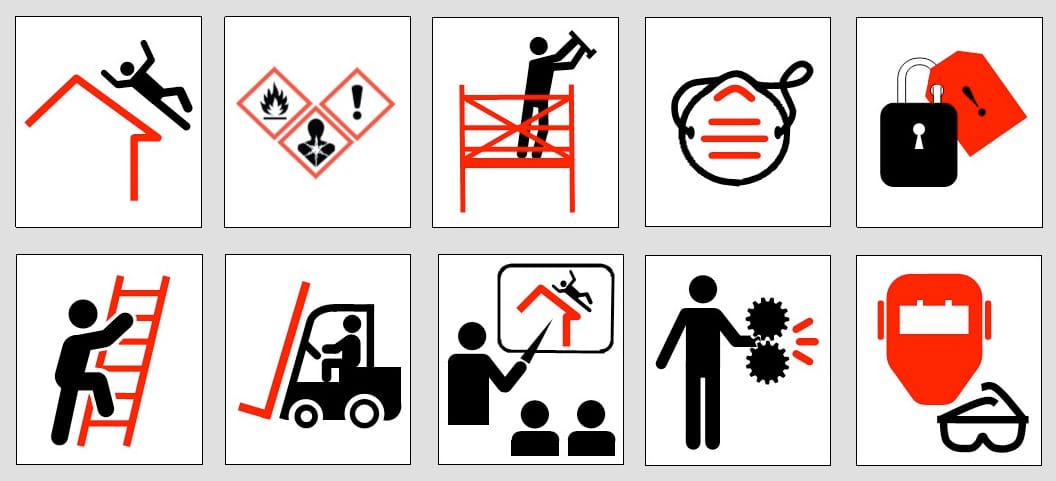
FED-OSHA TOP 10 Citations Issued in 2022 and the Basics of Prevention

1. Fall Protection: Falls, primarily from ladders and roofs, accounted for 370 fatalities in 2021. Any time a worker is at a height of 4 feet or more (in California the requirement is 30 inches or more), the worker is at risk and needs to be protected.

2. Hazard Communication: Employers are required to provide a written Hazard Communication Program, label hazardous chemicals, provide a Safety Data Sheet for each chemical, and document employee training.

3. Ladders: Limit ladder use to ladder safety trained and experienced staff only. Secure ladders with a chain to prevent usage by untrained staff.

4. Respiratory Protection: Body shop employees need specific training both on written policies and on practices involving the use of respirators during auto refinishing operations. Training for respiratory protection, fit testing, user seal check, and respiratory cleaning procedures is mandatory, as is the OSHA Respirator Medical Evaluation Questionnaire. When an employee wears a respirator, information on proper usage, including limitations, must be provided even when it is not required under the regulation.

5. Scaffolding: Primarily applicable to the construction industry.

6. Lockout/Tagout: Specific procedures and practices safeguard employees from the unexpected energization or startup of machinery and equipment. A written program and annual employee training is mandatory. Employees working on automobiles must comply by isolating energy to the engine to prevent inadvertent movement during repair or service. A lockout kit including locks should be available for each piece of equipment/machinery.

7. Powered Industrial Trucks (Forklifts): The high number of fatalities associated with forklifts and high number of violations associated with powered industrial trucks tell us that many workers are not properly trained to safely drive potentially hazardous equipment. OSHA compliance requires training in these specific activities: forklift operations, loading and unloading, and vehicle maintenance. Evaluating each operator every three years is also mandatory.


8. Fall Protection Training Requirements: Dealerships must protect employees working on 2nd floor of the parts department, especially while loading/unloading parts at the mezzanine edge.

9. Eye & Face Protection: Reinforce your Person Protective Equipment (PPE) policy and ensure all employees wear eye and face protection as necessary.

10. Machine Guarding: Moving machine parts have the potential to cause severe workplace injuries, such as crushed fingers or hands, amputations, burns, or blindness. Safeguards, including anchoring machinery, are essential for protecting workers from these preventable injuries. Any machine part, function, or process that may cause injury must be safeguarded. When machine operation or accidental contact with the machine may injure the operator or others in the vicinity, hazards must be eliminated or controlled. Moving parts in automobiles, grinders, and brake lathes are all subject to this regulation.

COMPLETE OSHA TRAINING ON THE WEB AT YOUR OWN PERILOSHA has stated repeatedly and consistently in its training-related interpretation letters that online or computer-based training is acceptable as part of an overall training program that includes hands-on, site-specific information and work practices where it is needed to meet workplace safety goals.  Many online courses may not be legitimate. In many instances, the training company clearly states that the training does not meet any local, state, or federal standards. The awakening happens when OSHA audits the workplace and finds the employer lacking in hands-on, site-specific information and work practices.

We discuss the hand-on element of some of the hands-on training requirements as follows:

1. Fall Protection: Employees must have hands-on training in using fall protection equipment such as harnesses. Also, the lanyards which automatically limit free fall distance are to be marked according to the actual edge. In summary, the training is hands-on and site-specific.

2. Forklift Training: Many employers are under the false assumption that the online training is sufficient for employees operating forklifts. Allowing a person who has completed only online training to operate a forklift is akin to driving an automobile after passing a written test. We all know that hands-on proficiency is to be shown before an actual driver’s license is granted. Some trainers will state in fine print that hands-on training is necessary, and some do not mention it all. An experienced trainer must provide training on the operation of the actual forklift and evaluate the employee on proficiency prior to providing an operator certification.

3. Lockout/Tagout (LOTO): A written program and employee training is mandatory along with the hands-on portion of lockout. An effective LOTO program requires that the employee must be able to show to the certifier that he possesses the tools and has procedural knowledge to effectively lockout and tagout the equipment, e.g., a faulty hoist.

4. Respiratory Protection: Each employee must be fit tested for the specific respirator to be worn by the employee. Respirator selection must be done by the employer based on the hazard to which the employee is/will be exposed. The SDS for the chemical being used must be utilized in the selection process. The employee should be given training on the respirator that must be worn during the work shift.

OSHA PENALTIES ARE UP AGAIN*

Type of ViolationPenalty
Other-Than-Serious$0 to $15, 625 per violation
Serious$1,116 to $15, 625 violation
Failure to Abate$15,625 per day beyond abatement date
Posting Requirements$0 to $15,625 per violation
Willful or Repeated$11,162 to $145,027 per violation

*Note: The penalties are automatically adjusted for inflation on an annual basis and based on the number of employees.

DISCLAIMER: The contents of this newsletter are for informational purposes only and are not to be considered legal advice. Employers must consult their lawyer for legal matters and EPA/OSHA consultants for matters related to Environmental, Health & Safety. The article was authored by Sam Celly of Celly Services, Inc. who has been helping automobile dealers in Arizona, California, Hawaii, Idaho, Nevada, New Mexico, New York, Texas, and Virginia comply with EPA and OSHA regulations for over 35 years. Sam is a Certified Safety Professional (No. 16515) certified by the National Board of Certified Safety Professionals. Sam received his BE (1984) and MS (1986) in Chemical Engineering, followed by a J.D. from Southwestern University School of Law (1997). Sam is a member of the American Chemical Society (No. 31176063), American Industrial Hygiene Association (No. 124715), and National Association of Dealer Counsel (NADC). Sam also serves on the Board of Orange County American Industrial Hygiene Association and on CA Industrial Hygiene Council (CIHC). Our newsletters can be accessed at www.epaoshablog.com. We welcome your comments/questions. Please send them to sam@cellyservices.com.
CA Generation And Handling Fee (Amendment To Our Earlier Newsletter Of January 23, 2023)

As of January 1, 2022, the hazardous waste Generator Fee has been repealed and replaced with a new Generation and Handling (GH) fee (Senate Bill 158; Stats. 2021, ch.73). Prior to January 1, 2022, the hazardous waste generator fee was imposed on a tiered category basis.  The State sent out Special notices in December 2021 Hazardous Waste Generation and Handling Fee – Application of Fee, Payments, and New Rate Effective January 1, 2022

Effective January 1, 2022, the hazardous waste generation and handling fee is imposed as a flat rate per ton or fraction of a ton on generators of hazardous waste for each generator site that generates five or more tons of hazardous waste at a site in California within a calendar year.

The hazardous waste generation and handling fee is calculated based on the total weight (measured in tons) of hazardous waste generated (produced or caused to be managed) from each site per year. The hazardous waste generation and handling fee is generally due regardless of the waste’s final disposition. Weight tickets should be maintained by the dealership to support the actual weight/quantity being reported. For more information, please visit the Department of Toxic Substances Control’s (DTSC) Manifest webpageFee Summary webpage, and  Hazardous Substances (Waste) Fee Guide (ca.gov).  State of California has posted guidance on this law on the https://dtsc.ca.gov/generator-fee/  (DTSC) website. 

State sent a Special notice on Filing requirements in August 2022. L-863, Hazardous Waste Generation and Handling Fee Program Reminders and Online Filing Requirement (ca.gov).

Hazardous wastes that are typically generated at an automobile dealership and subject to this fee are:

·         Recycled hazardous waste

·         Non-manifested universal waste

·         Waste sent outside California for disposal

·         Used motor oil (Except used oil collected from the public. See note below)

·         Waste coolant (CA code 134),

·         Oily water (CA Code 223), and

·         Waste paper filters (CA code 352 or 223)

If you are punching or crushing metal oil filters, under DTSC guidelines, you can dispose of them as scrap metal (through your hazardous waste hauler) and hence not be subject to this fee. If you decide to dispose of used metal oil filters as hazardous waste, those metal filters get added to your hazardous waste tonnage calculations. 
 

HOW THE FEE IS CALCULATED

Beginning January 1, 2022, all GH fee accounts are required to make one prepayment which is due and payable on or before November 30th each year.

  • Prepayment – Due on November 30th of each year.
  • Final Payment with Return – Due on February 28th of each year.

Your prepayment must be equal to 50 percent of the total amount due for the hazardous waste generation and handling fee for the entire prior calendar year.  Keep proper records to support tonnage of hazardous waste generated and handled at each site.

Reporting PeriodPrepayment Due DateReturn & Final Payment Due DateReport Based on Hazardous Waste Generated in Prior Reporting Period
Calendar Year 2022November 30, 2022February 28, 2023Calendar Year 2021
Calendar Year 2023November 30, 2023February 28, 2024Calendar Year 2022
Calendar Year 2024November 30, 2024February 28, 2025Calendar Year 2023


Returns

The hazardous waste GH fee return and payment are due by February 28 each year. (RTC 43152.7) The fee is calculated based on waste generated in the prior calendar year. (HSC 25205.5)

File a Return Online – You are required to file your GH fee return electronically through California Department of Tax and Fee Administration (CDTFA) online services homepage.

Every generator that produces five tons or more of hazardous waste will pay CDTFA a GH Fee for each generator site for each calendar year, or portion thereof. Hazardous Waste facilities permitted under a full or standardized permit that pay annual Generators are required to report the amount of waste generated on a hazardous waste Generation and Handling Fee return provided by CDTFA. The rates specified in table below are for Fiscal Year 2022/23 for hazardous waste generated in Calendar Year 2021:

Note 1: Commencing on July 1, 2023, the Board of Environmental Safety will reset (increase) the annual GH Fee to correspond to the annual appropriation amount for Fiscal Year 2023/24, per Health &Safety Code section 25205.5.01. Beginning with FY 2024/25, the Board shall adjust the GH Fee for changes to the Consumer Price Index (CPI).

Note 2: Please contact your waste hauler(s) for technical guidance on conversion of gallons of waste to tons.
For example, 1 gallon of used oil is approximately 7.4 pounds. 10,000 gallons is 74,000 pounds. 2,000 pounds equals one ton.

74,000/2,000 = 37 tons.  In summary, 10,000 gallons of used motor oil weighs approximately 37 tons!
Note 3: GH Fees do not apply to used oil collected from the public by certified used oil collection centers.

Don’t know your tonnage?

Please contact your dedicated waste hauler(s) to determine total tonnage. Once determined, please register online with CDTFA and complete the fee process. Maintain support documentation of fee completion for your records. Finally, we note that this is a tax/fee matter and you must consult your tax consultant on calculations and record retention requirements.

Contacts at CDTFA:  Thomas, Cathie Cathie.Thomas@cdtfa.ca.gov, Kevin McCarley Kevin.McCarley@cdtfa.ca.gov, Yatoba Godina Yatoba.Godina@cdtfa.ca.gov or 800-400-7115.

DISCLAIMER: The contents of this newsletter are for informational purposes only and are not to be considered legal advice. Employers must consult their lawyer for legal matters and EPA/OSHA consultants for matters related to Environmental, Health & Safety. The article was authored by Sam Celly of Celly Services, Inc. who has been helping automobile dealers in Arizona, California, Hawaii, Idaho, Nevada, New Mexico, New York, Texas, and Virginia comply with EPA and OSHA regulations for over 35 years. Sam is a Certified Safety Professional (No. 16515) certified by the National Board of Certified Safety Professionals. Sam received his BE (1984) and MS (1986) in Chemical Engineering, followed by a J.D. from Southwestern University School of Law (1997). Sam is a member of the American Chemical Society (No. 31176063), American Industrial Hygiene Association (No. 124715), and National Association of Dealer Counsel (NADC). Sam also serves on the Board of Orange County American Industrial Hygiene Association and on CA Industrial Hygiene Council (CIHC). Our newsletters can be accessed at www.epaoshablog.com. We welcome your comments/questions. Please send them to sam@cellyservices.com

California COVID-19 Prevention Non-Emergency Regulations

The COVID-19 Prevention Non-Emergency Regulations requiring employers to protect workers from hazards related to COVID-19 are effective as of February 3, 2023.  These include several changes and various requirements continuing from the Emergency Temporary Standards (ETS).  They will remain in effect through February 3, 2025, with the recordkeeping section of the law valid through February 3, 2026.

Important changes to the COVID-19 Prevention rules include:

  1. Daily Symptom Screenings No Longer Required. Employees are no longer required to go through the daily ritual of informing their employer that they are COVID free. Now employees are required to inform their supervisor that they are symptomatic before entering the place of employment and to seek exclusion as appropriate.
  2. Exclusion Pay. Employees excluded from workplace are not eligible for any pay irrespective of whether the exposure happened at workplace or not.  Employees should be educated on sick pay, vacation pay, FMLA and other benefits available.
  3. Employee Notification.  Employees can now be notified by posting notices on the employee notice board (i.e., lunchroom) regarding close contact exposure.  Notices must be posted within one business day of learning that a person in the workplace has COVID-19 and continue for 15 days.
  4. Close Contact: “Close contact” is now defined by looking at the size of the workplace in which the exposure takes place. For indoor airspaces of 400,000 or fewer cubic feet, “close contact” is now defined as sharing the same indoor airspace with a COVID-19 case for a cumulative total of 15 minutes or more over a 24-hour period during the COVID-19 infectious period. For indoor airspaces of greater than 400,000 cubic feet, “close contact” is defined as being within six feet of a COVID-19 case for a cumulative total of 15 minutes or more over a 24-hour period during the COVID-19 infectious period.

Merge the COVID-19 Plan into the Illness & Injury Prevention Plan (IIPP)

The regulations allow the employers to merge the COVID-19 Plan into their IIPP.  In the past few years, we have seen the guidelines being tightened during outbreaks and then being relaxed.  For example, the regulations refer to the guidelines from California Department of Public Health (CDPH) which were changing during the pandemic.  Since the COVID-19 Plan may undergo changes during the next two years, employers are better served to keep their COVID-19 Plan and IIPP separate.

Ventilation, Filtration, & HEPA Filters

The regulations impose additional requirements on improving air quality at the workplace through one or more of the following options: maximizing fresh uptake to the HVAC units, increasing the filtration efficiency, and providing individual HEPA filtration units.

  • Maximizing the fresh air uptake can be achieved through your HVAC contractor.  The fresh air uptake will have an impact on your energy bills as greater amount of fresh air during the summer months will increase your cooling bill and heating bill in the winter months.
  • Minimum Efficiency Reporting Values, or MERV, reports a filter’s ability to capture particles. Filters with MERV-13 or higher ratings can trap smaller particles, including viruses. Upgrade to a MERV-13 rated filter, or the highest-rated filter that your HVAC system fan and filter slot can accommodate.
  • Individual Air Purifying units with True HEPA filters can remove up to 99.7% of the viruses.

OTHER IMPORTANT REQUIREMENTS CONTINUING FROM THE ETS

  • COVID Testing. Employers must make COVID-19 testing available at no cost and during employees’ paid time regardless of vaccination status, to all employees who have had close contact in the workplace with an exception for symptom-free employees who recently recovered from COVID-19 (returned cases).
  • Face Coverings.  Employers must provide face coverings and ensure they are worn by employees when CDPH requires their use. Additionally, employees have the right to wear face coverings and request respirators from the employer when working indoors and during outbreaks. https://www.cdph.ca.gov/Programs/CID/DCDC/Pages/COVID-19/guidance-for-face-coverings.aspx.
  • Reporting. Employers must report information about employee deaths, serious injuries, and serious occupational illnesses to Cal/OSHA, consistent with existing regulations.
  • Exclusion. Employers must exclude COVID-19 cases from the workplace until they are no longer an infection risk and must implement policies to prevent transmission after close contact.

The new regulations ease the burden on employers as COVID-19 related illnesses and fatalities have gone down.  Needless to say, the regulations may get ratcheted up should COVID related illnesses increase. 

In 1896, Dr. William Osler, a founder of Johns Hopkins hospital stated in his address The Fevers of the South at the American Medical Association meeting in Atlanta, Georgia: “Humanity has but three great enemies: fever, famine and war; of these by far the greatest, by far the most terrible, is fever.”  We can say that with the help of the vaccine, safety protocols, and other technologies, we have won the war with the fever.  At least this time.

All employers in the State of California are required to maintain an operational COVID-19 Prevention Plan pursuant to Title 8 CCR and Cal/OSHA Emergency Temporary Standards (ETS).  Please visit CNCDA www.cncda.org for a model COVID-19 Prevention Plan for auto dealers or click here for a sample COVID-19 Prevention Plan from Cal/OSHA.

Sources

COVID-19 Prevention Non-Emergency Regulations. 2023. https://www.dir.ca.gov/DOSH/Coronavirus/Covid-19-NE-Reg-FAQs.html. March 13, 2023
COVID-19 Prevention Non-Emergency Regulations. 2022. https://www.dir.ca.gov/dosh/coronavirus/Non_Emergency_Regulations/
COVID-19 ETS What Employers Need to Know About the December 15 2022 Standards (ca.gov). 2022. https://www.dir.ca.gov/dosh/coronavirus/Non-Emergency-regs-summary.pdf
Partin, Clyde. 2019. The Oslerian legacy in the Southern states. Baylor University Medical Center Proceedings, 32:4, 538-543, DOI: 10.1080/08998280.2019.1635631. Downloaded from https://www.ncbi.nlm.nih.gov/pmc/articles/PMC6794078/
What kind of filter should I use…? 2023. https://www.epa.gov/coronavirus/what-kind-filter-should-i-use-my-home-hvac-system-help-protect-my-family-covid-19. Updated March 8, 2023
DISCLAIMER: The contents of this newsletter are for informational purposes only and are not to be considered legal advice. Employers must consult their lawyer for legal matters and EPA/OSHA consultants for matters related to Environmental, Health & Safety. The article was authored by Sam Celly of Celly Services, Inc. who has been helping automobile dealers in Arizona, California, Hawaii, Idaho, Nevada, New Mexico, New York, Texas, and Virginia comply with EPA and OSHA regulations for over 35 years. Sam is a Certified Safety Professional (No. 16515) certified by the National Board of Certified Safety Professionals. Sam received his BE (1984) and MS (1986) in Chemical Engineering, followed by a J.D. from Southwestern University School of Law (1997). Sam is a member of the American Chemical Society (No. 31176063), American Industrial Hygiene Association (No. 124715), and National Association of Dealer Counsel (NADC). Sam also serves on the Board of Orange County American Industrial Hygiene Association and on CA Industrial Hygiene Council (CIHC). Our newsletters can be accessed at www.epaoshablog.com. We welcome your comments/questions. Please send them to sam@cellyservices.com

Environmental Verification Questionnaire (EVQ) CALIFORNIA BUSINESS ONLY

CA Annual EPA ID Number Verification Questionnaire (EVQ):  If you have a California EPA ID number, you need to complete an EVQ.  If you do not complete it in 30 days from the date of notification and pay the fee, your EPA ID number gets deactivated and the hauler will stop picking up your waste.  Please consider this as a priority.  https://evq.dtsc.ca.gov/Documents/user_guide.pdf

Options:

  1. Dealers complete the EVQ ASAP (Go to https://evq.dtsc.ca.gov). Let us know at Celly Services that you have completed this via email.
  2. If you want Celly Services to complete the EVQ, send us the username and password for EVQ ASAP (we may have saved password from prior years in files).  Send us information as follows:
  • The number of employees in California.
  • CDTFA Number (for facilities with haz waste generated over 5 tons, i.e., prox. 1500 gallons per year)

Once completed, we will send you the completed EVQ form and invoice to pay the EVQ fee to the state. Please contact your Celly Rep if you have any questions.

What happens if you do not file EVQ? 

The dealership’s EPA ID number will be made INACTIVE.  There is no real warning to the dealership.  The hauler stops picking up the hazardous waste as the EPA number has become inactive.  Your hazardous waste oil tanks, drums and buckets can continue to overflow! Only after completion of a new EPA ID application, completion of the EVQ and upon the payment of fees, will the EPA ID number get reactivated.  This whole process can take over two weeks and can be demanding.

Fees can range from $0-600 per EPA ID number, depending upon the number of employees at the dealership and the hazardous waste manifests completed for the year.


Other Useful Links

·       Verification Questionnaire Step by Step Guide

·      California Hazardous Waste Classification (Online Course)

·       Check My ID Number Status

DISCLAIMER: The contents of this newsletter are for informational purposes only and are not to be considered legal advice. Employers must consult their lawyer for legal matters and EPA/OSHA consultants for matters related to Environmental, Health & Safety. The article was authored by Sam Celly of Celly Services, Inc. who has been helping automobile dealers in Arizona, California, Hawaii, Idaho, Nevada, New Mexico, New York, Texas, and Virginia comply with EPA and OSHA regulations for over 35 years. Sam is a Certified Safety Professional (No. 16515) certified by the National Board of Certified Safety Professionals. Sam received his BE (1984) and MS (1986) in Chemical Engineering, followed by a J.D. from Southwestern University School of Law (1997). Sam is a member of the American Chemical Society (No. 31176063), American Industrial Hygiene Association (No. 124715), and National Association of Dealer Counsel (NADC). Sam also serves on the Board of Orange County American Industrial Hygiene Association and on CA Industrial Hygiene Council (CIHC). Our newsletters can be accessed at www.epaoshablog.com. We welcome your comments/questions. Please send them to sam@cellyservices.com

KNOW YOUR TONNAGE: GENERATION AND HANDLING FEE (SB 158)

CHANGES TO HAZARDOUS WASTE DISPOSAL FEE FOR CA DEALERSHIPS

The state of California has levied a fee for many years on hazardous wastes generated by auto dealers and others.  The fee structure specifically exempted used oil generated at auto dealerships.  California SB 158, effective January 1, 2022, specifically removes the exemption on used oil from the fee and adds other wastes that are now subject to the fee.  The hazardous waste Generation and Handling (GH) fee is a flat rate per ton or fraction of a ton on generators of hazardous waste for each generator site that generates five or more tons of hazardous waste at a site in California within a calendar year.

Wastes subject to this fee include recycled hazardous waste, non-manifested treated wood waste, non-manifested universal waste, imported waste, and waste sent outside California for disposal. Used motor oil now gets added to the category, where previously only waste coolant (CA code 134), oily water (CA Code 223), and waste paper filters (CA code 352 or 223) were present.  In the past, the first 5 tons were exempt from taxes, most claimed exemption.  Not anymore.  Also, if you are punching or crushing metal oil filters, under DTSC guidelines, you can dispose of it as scrap metal and hence not be subject to this fee.  If you decide to dispose of used metal oil filters as hazardous waste, those metal filters get added to your hazardous waste tax calculations. 

HOW THE FEE IS CALCULATED

The hazardous waste generation and handling fee is generally due regardless of the waste’s final disposition. Weight tickets should be maintained to support the actual weight/quantity being reported. Please reference DTSC fee chart below:

Generation and Handling Fee FY 2022/23

RatesDue Dates
First Prepayment (50%)November 30, 2022 (during reporting period)
Final PaymentFebruary 28, 2023 (after the reporting period)
Fee Rate: $0 if less than 5 tons/year
$49.25/ton (or fraction of a ton) for aggregate waste of 5 or more tons/year

Don’t know your tonnage?

Please contact your dedicated waste hauler(s) to determine total tonnage. Once determined, please register online with CDTFA and complete the fee process. Maintain documentation of fee completion for your records.  Finally, we note that this is a tax/fee matter and you must consult your tax consultant on calculations and record retention requirements.

DISCLAIMER: The contents of this newsletter are for informational purposes only and are not to be considered as legal advice. Employers must consult their lawyer for legal matters and EPA/OSHA consultants for matters related to Environmental, Health & Safety. The article was authored by Sam Celly of Celly Services, Inc. who has been helping automobile dealers in Arizona, California, Hawaii, Idaho, Nevada, New Mexico, New York, Texas, and Virginia comply with EPA and OSHA regulations for over 35 years. Sam is a Certified Safety Professional (No. 16515) certified by the National Board of Certified Safety Professionals. Sam received his BE (1984) and MS (1986) in Chemical Engineering, followed by a J.D. from Southwestern University School of Law (1997). Sam is a member of the American Chemical Society (No. 31176063), American Industrial Hygiene Association (No. 124715), and National Association of Dealer Counsel (NADC). Sam also serves on the Board of Orange County American Industrial Hygiene Association and on CA Industrial Hygiene Council (CIHC). Our newsletters can be accessed at www.epaoshablog.com. Your comments/questions are welcomed. Please send them to sam@cellyservices.com.

Best Management Practices (BMP) for Handling Stormwater

In recent years, stormwater management has become extremely important as EPA and other regulating agencies have concluded that storm (rain) water picks up enough contaminants from parking lots and other industrial facilities that it is a major source of pollution to our rivers and oceans.  The problem is so severe that many industrial facilities are being directed to manage their storm water as it leaves their premises.  Auto servicing facilities are not on that list, as yet.  However, municipalities are required to meet pollutant discharge criteria to rivers and oceans and to meet this criteria they are directing auto facilities to minimize the contaminants to the storm sewers.  Auto facilities are hence required to set up programs and training so as to minimize contaminants to the stormwater.

The enclosed document, Best Management Practices (BMP) for stormwater from Vehicle Maintenance Facilities, outlines procedures and training guidelines for management and employees that can help minimize pollutant discharge to the stormwater.  Please copy and circulate the document to all your shop management and staff.  We believe that with the installation of training and procedures outlined in the document, the dealership can attain compliance with the local, state and federal guidelines that require BMP for stormwater management at your facility. 

We further note that if you are constructing a new facility or remodeling an existing facility, the local municipality may require you to actually manage the stormwater, i.e., treat stormwater, prior to discharge to the local storm drain.  The details of such treatment procedures are best handled at the local level.  If you have any questions or comments, please do not hesitate to call Celly Services, Inc. at (562) 704-4000.

ANNUAL GASOLINE USAGE FROM UST & AST LOG SCAQMD & BAAQMD Requirements

SOUTH COAST AQMD ANNUAL REPORTING OF GASOLINE USAGE   All dealerships with aboveground storage tanks (AST) and/or underground storage tanks (UST) must report monthly throughput data for each month of 2022 and the total to the SCAMQD by fax to (909) 396-3761.  Deadline for reporting is March 1, 2023.  SCAQMD Form to report data is attached. Rule 461(e)(7)(D). http://www.aqmd.gov/docs/default-source/rule-book/rule-iv/rule-461.pdf NOTE 1: Post a copy of the permit from SCAQMD in the office area near the tank. NOTE 2:  Follow all the conditions listed on the permit including annual back pressure test etc.. NOTE 3: All records shall be retained for 24 months and made available at the gasoline dispensing facility for inspection by the Air Protection Control Officer (APCO).
BAY AREA AQMD ANNUAL REPORTING OF GASOLINE USAGE   All dealerships who dispense gasoline shall maintain records of the quantity of gasoline dispensed (throughput data) from the storage tanks during the last 12 month period.  BAAQMD Form to store the data is attached.  Rule 8-7-503. https://www.baaqmd.gov/~/media/dotgov/files/rules/reg-8-rule-7-gasoline-dispensing-facilities/documents/rg0807.pdf?la=en&rev=55e12318cc9f47c1bd38690a14c85540 NOTE 1: Post a copy of the permit from BAAQMD in the office area near the tank. NOTE 2:  Follow all the conditions listed on the permit including annual back pressure test etc.. NOTE 3: All records shall be retained for 24 months and made available at the gasoline dispensing facility for inspection by the Air Protection Control Officer (APCO).

First-Aid Kits: Regulations & Good Practice

Background: On October 15, 2022, the American National Safety Institute (ANSI) requirements for First-Aid kits changed.  In this newsletter, we discuss the changes to the regulatory requirements for first-aid kits, guidelines, and training.  California and Federal regulations mandate that employers ensure ready availability of medical personnel for advice on matters of industrial health or injury. 

CAL/OSHA:  California regulations mandate that a first-aid kit approved by a consulting physician be available on the premises for every work person on the job.  A consulting physician is a medical doctor who is well versed with dealership operations and has knowledge of typical hazards and accidents on the job (Ref: T8CCR3400 (a) and (b) and (c)).

Fed-OSHA: Regulations state that an employer must have “adequate first-aid supplies…readily available,” although specific first-aid supplies are not listed. Fed OSHA has referred employers to ANSI as the source of guidance for the minimum requirements for first aid kits and supplies; it does so in Appendix A to 1910.151. On April 15, 2022, ANSI approved ANSI/ISEA Z308.1-2021 effective October 15, 2022, the sixth revision to the voluntary industry consensus standard since its inception in 1978. 

New requirements for both Class A and Class B First Aid kits include more hand sanitizer (thanks to COVID-19), and a foil blanket, since it serves multiple purposes such as emergency water proofer, windbreaking wrap, and treating hypothermia. Additionally, Class B kits now require specific types of tourniquets to prevent blood loss, and distinct from those used for drawing blood.  Splints are also a requirement for Class B kits. 

Employers may adopt the ANSI standard or request their local occupational injury clinic to provide a list of items for the first-aid kit.They should, however, be selected only upon completion of hazard assessment of the work environment and by a person competent in first-aid and knowledgeable of the hazards specific to that workplace (Ref: 29CFR1910.151(b)). 

Hazard assessment involves reviewing workplace hazards, typical injuries that have happened (see Log 300) or could occur at the workplace, and the availability of the supplies necessary to respond to those injuries.  Risk assessment includes looking at Bureau of Labor Statistics (BLS) or OSHA injury data.  The M.D. at the local clinic responding to occupational injuries can be a source of guidance as well.  Inspect and refill First-Aid kits monthly. Keep a written log. Discard expired items promptly.  Disinfect cabinet surfaces frequently.  Ensure labeling and markings are legible and permanent.  Check that each kit and its location is visibly marked.  Place signs at a conspicuous location that indicate the locations of First-Aid kits on site.

While the regulations are silent on number of kits, employers must consider whether multiple kits are needed based upon facility layout, number of employees and access to the kits during the work turn.  The distance from the clinic must also be part of the decision-making process.

Class A vs. Class B

Class A kits have contents capable of response to most common workplace injuries including minor burns and eye injuries.  Class B kits are intended to treat injuries in densely populated areas and high-risk environment workplace such as factories, foundries, and warehouses.

ANSI Standard Class A Kit:

Required Min. Fill Z308.1-2021 (eff. Oct. 15, 2022)
16 Adhesive Bandage 1×3 in.
1 Adhesive Tape 2.5 yd. (Total)
10 Antibiotic Application 1/57 oz.
10 Antiseptic 1/57 oz.
1 Breathing Barrier
1 Burn Dressing (Gel Soaked) 4×4 in.
10 Burn Treatment 1/32 oz.
1 Cold Pack 4×5 in.
2 Eye Covering w/Means of Attachment 2.9 sq. in.
1 Eye/Skin Wash 1 fl. oz. (Total)
1 First-Aid Guide
10 Hand Sanitizer 1/32 oz. (increased as of Oct. 2022)
2 Medical Exam Gloves
1 Roller Bandage 2 in. x 4 yd.
1 Scissor
2 Sterile Pads 3×3 in.
2 Trauma Pads 5×9 in.
1 Triangle Bandage 40x40x56 in.
1 Foil Blanket 52×84 in (added as of Oct. 2022)

ANSI Standard Class B Kit: The Type B kit has a Splint and Tourniquet added to the list above with increased number of supplies listed for Type A. 

Types of First-Aid Kit Containers:

  • Type I containers are used in stationary indoor settings.  No rough handling.
  • Type II containers are used in portable indoor settings. No rough handling.
  • Type III containers are used for mobile, indoor/outdoor settings.
  • Type IV containers are used for portable use in outdoor settings where rough handling is a factor.

Commentary:  Dealership management should make prudent decisions on the number and location of the first-aid kits.  Get at least one kit for every 40 employees.  First, keep in mind that all areas of employment should have access to kits.  For example, if only the sales department is open on a Saturday, then a kit must be made available to employees in that area.  Secondly, these kits are subject to pilferage and abuse.  To avoid pilferage, the first-aid kit may be placed in the office or open view of the manager.  If an employee is observed using multiple bandages more often than others, the employee can be counseled on safety and proper work procedure to avoid slicing his/her hand multiple times a day!  Make sure that access is not compromised, i.e., kits must remain completely accessible when employees are present. 

Employers who choose not to have first-aid kits violate the law and also risk loss of productive time when employees must rush to the local drug store for a bandage every time, they incur an injury.

Ref: Information from www.osha.gov and http://www.dir.ca.gov were used to prepare this newsletter. 

DISCLAIMER: The contents of this newsletter are for informational purposes only and are not to be considered as legal advice. Employers must consult their lawyer for legal matters and EPA/OSHA consultants for matters related to Environmental, Health & Safety. The article was authored by Sam Celly of Celly Services, Inc. who has been helping automobile dealers in Arizona, California, Hawaii, Idaho, Nevada, New Mexico, New York, Texas, and Virginia comply with EPA and OSHA regulations for over 35 years. Sam is a Certified Safety Professional (No. 16515) certified by the National Board of Certified Safety Professionals. Sam received his BE (1984) and MS (1986) in Chemical Engineering, followed by a J.D. from Southwestern University School of Law (1997). Sam is a member of the American Chemical Society (No. 31176063), American Industrial Hygiene Association (No. 124715), and National Association of Dealer Counsel (NADC). Sam also serves on the Board of Orange County American Industrial Hygiene Association and on CA Industrial Hygiene Council (CIHC). Our newsletters can be accessed at www.epaoshablog.com. Your comments/questions are always welcome. Please send them to sam@cellyservices.com.

REFRIGERANT RECYCLING REQUIREMENTS FOR MOTOR VEHICLES UNDER CLEAN AIR ACT (CAA)

Background:  Since July 1992, regulations promulgated under the CAA require that motor vehicle air conditioning refrigerant be recycled.  In 2006, auto dealers in San Francisco area were penalized for violations arising under this act.  Serious penalties and legal drama followed. (https://www.epa.gov/archive/epapages/newsroom_archive/newsreleases/bfbf6466f34e57b785257368007177bc.html). We must note that these CAA regulations are federal regulations and are applicable to all auto dealers in the US and not to San Francisco dealers alone.  To achieve compliance under this regulation, dealers must act as follows:

  • Clean Air Act Section 609 Technician Certification Program:  All employees working on A/C systems must be trained and tested by a program approved by EPA on how to properly recover and recycle refrigerant (such as Freon 12, HFC-134(a) or any other EPA approved refrigerant).
  • Clean Air Act Section 609 Approved Equipment:  Section 609 mandates that technicians must use EPA approved equipment to perform refrigerant recovery and recycling. Visit https://www.epa.gov/mvac/section-609-certified-equipment for a list of approved equipment. 

Technician CertificationAll shop employees repairing/servicing/diagnosing or working in any way on A/C systems must receive training and certificate from an EPA approved training program.  The list of training programs is available on https://www.epa.gov/mvac/section-609-technician-training-and-certification-programs.  We note that training programs on A/C systems provided by auto manufacturers are a requirement to repair and service automobiles, but they do not in any shape or form help in compliance with this law.  Training programs provided by other government bodies such as the South Coast Air Quality Management District also do not help achieve compliance with this law.  The training program undertaken by the employees must be on the EPA approved list.

We recommended that you do not allow any employee without training to work on A/C repair or service unless the employee has provided the management with a copy of certification from an EPA approved body.  A copy of the certificate should be retained in the Black Box under the file “Air Quality” and a copy sent to Human Resources (Business Office) for retention in the employee file.  You may need a copy of the certification three years beyond the date of departure of the tech!  (More reading on this issue is available at https://www.epa.gov/mvac/epa-regulatory-requirements-mvac-system-servicing)