On July 23, 2024, the Occupational Safety and Health Standards Board approved the “Heat Illness Prevention in Indoor Places of Employment” (California Code of Regulations, Title 8, Section 3396). This standard establishes safety measures to prevent heat illness.
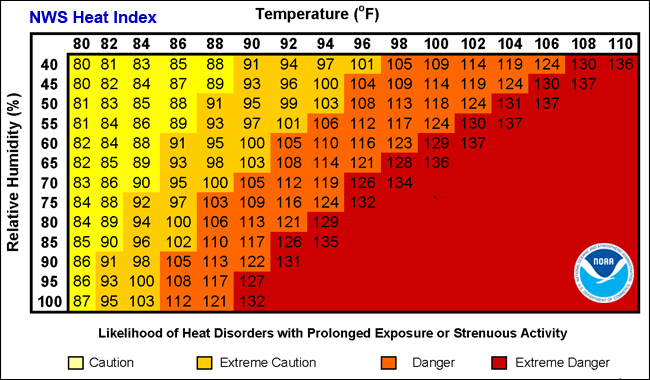
| Where does Cal/OSHA’s Indoor Heat Illness Prevention (IHIPP) Statute apply? All indoor work areas where the temperature or heat index equals or exceeds 87 degrees Fahrenheit (F) when employees are present. In workplaces where employees wear clothing (possible PPE) that restricts heat removal, the statute applies 82 degrees F. “Indoor” refers to a space that is under a ceiling or overhead covering and is enclosed along its entire perimeter by walls, doors, windows, dividers, or other physical barriers that restrict airflow. In automobile dealerships, most likely areas for this law to apply will be closed shops, parts warehouse etc.. Air-conditioned office and showroom space would be exempt. Temperature & Heat Index: Temperature can be measured by a thermometer. Heat Index is calculated based upon temperature and humidity. In high humidity, sweat does not evaporate creating a dangerous condition for workers. Heat index calculations require an instrument to read the humidity. The humidity and the temperature reading are placed on the US Govt. chart on page 2 of this Newsletter and the heat index is calculated. For example, if the temperature is 84F and the humidity is 70%, the Heat Index is 90 and hence the IHIPP kicks in. This is above the action level of 87F as listed in para above, employer is now required to document actions as listed below. EMPLOYER ACTIONSMEASURE & KEEP RECORD of the greater of measured temperature and the calculated heat index as temperatures begin rising toward 80°F. Use the log attached. PROVIDE BREAK ROOM/COOL DOWN AREA: The break room AC must operate below 82°F. Cool, potable water is required when the temperature or heat index reaches 87°F indoors. TRAIN all supervisory and non- supervisory employees on Heat Illness Prevention. Find the training memo on the Elearn portal. CA Title 8 CCR 3395 (h)INCLUDE WRITTEN PROCEDURES for Indoor Heat Illness Prevention in the Heat Illness Prevention Plan (HIPP), Injury and Illness Prevention Plan (IIPP), or maintain separately. The HIPP is available on the CSI Elearn platform under EHS documents. |
Note: Cal/OSHA’s outdoor heat illness prevention program at Title 8, Section 3395 has been in effect since 2015.
HEAT INDEX. Heat index is a measure of heat stress that combines relative humidity with air temperature to capture what the temperature feels like to the human body. When the body gets too hot, it begins to sweat to cool itself off. If the sweat can’t evaporate, the body can’t regulate its temperature. High humidity limits sweat evaporation and prevents effective cooling of the body.
Maintain the Log
1. Measure the temperature and humidity. Calculate the heat index. RECORD WHICHEVER IS GREATER on the log attached (when > 82°F).Use a shop thermometer to measure temperature in conjunction with an instrument called hygrometer to measure humidity to get the heat index. Alternately, buy an instrument that includes both temperature and humidity (ex: https://buythermopro.com/product/tp53/).
2. Go to the National Oceanic and Atmospheric Administration (NOAA) website to calculate the heat index (https://www.wpc.ncep.noaa.gov/html/heatindex.shtml) or use the table below.
For example, the indoor thermometer reads 88°F and the hygrometer reads 75%. This means the heat index is 103 (from the NOAA heat index website or the table below). Simply put, it feels hotter due to the high humidity and this, the heat index, is the relevant measure to record. Because 103 > 88°F, 103 should be recorded in the attached log. NOTE: Maximum temperatures are typically between 1PM and 5PM.
COMPARISON of INDOOR and OUTDOOR HEAT ILLNESS PREVENTION STANDARDS
| Requirement | Outdoor Heat (T8CCR 3395) | Indoor Heat (T8CCR 3396) |
| Scope and Application | Applies to outdoor workplaces | · Applies to indoor workplaces when the indoor temperature is greater than 82°F.· The heat index should be used to measure this temperature as it incorporates relative humidity to show how hot it feels to the human body. |
| Provide Clean Drinking Water | · Provide access to potable water that is fresh, suitably cool, and free of charge. Located as close as possible to work areas. | · Provide access to potable water that is fresh, suitably cool, and free of charge.· Located as close as possible to work areas and cool-down areas. |
| Access to Shade and Cool-Down Areas | ·For outdoor workplaces, shade must be present when temperatures are greater than 80°F. When temperatures are less than 80°F, shade must be available upon request.· For indoor workplaces, provide access to at least one cool-down area, such as a break room, which must be kept at a temperature below 82°F using AC or other cooling methods.· Shade and cool-down areas must be : Blocked from direct sunlight . Large enough to accommodate the number of workers on rest breaks so they can sit comfortably without touching each other. Close as possible to the work areas. For indoor workplaces, the cool-down areas must be kept at less than 82°F and shielded from other high-radiant heat sources. | |
| Cool-Down Rest Periods | · Encourage workers to take preventative cool-down rest periods.· Allow workers who ask for a cool-down rest period to take one.· Monitor workers taking such rest periods for symptoms of heat-related illness. | |
| High-Heat Procedures | · Have and implement procedures to deal with heat when the temperature equals or exceeds 95°F.· Procedures must include:· Observing and communicating effectively with workers.· Reminding workers to drink water and take cool-down rest breaks. | · Not applicable to Indoor Workplaces. |
| Assessment and Control Measures | · Not applicable to Outdoor Workplaces. | · As temperatures rise above 80F, measure indoor temperature and humidity. Calculate the heat index. If the temperature or heat index is at or above 87F, record whichever is greater of the temperature and heat index on the log attached. Statute requirements kick-in.· (For workers in high-radiant-heat areas, or wear clothing that restricts heat removal, the temperature or heat index must be recorded when either reaches 82°F).· Implement control measures to keep workers safe. Feasible engineering controls must be implemented first. |
| Monitoring the Weather | Monitor outdoor temperature and ensure that once the temperature exceeds 80°F, shade structures will be opened and made available to the workers. When it is at least 95°F, implement high-heat procedures. Supervisors can use the OSHA-NIOSH heat index tool to quickly check heat index (outdoor).Train supervisors on how to check weather reports and how to respond to weather advisories. | · For indoor workplaces that are affected by outdoor temperatures, train supervisors on how to check weather reports and how to respond to hot weather advisories.· Train supervisors on how to measure temperature and humidity and calculate the heat index. |
| Emergency Response Procedures | · Provide first aid or emergency response to any workers showing heat illness signs or symptoms, including contacting emergency medical services. | |
| Acclimatization | · Closely observe new workers and newly assigned workers working in hot areas during a 14-day acclimatization period, as well as all workers working during a heat wave. | |
| Training | · Employers must provide training to all employees—supervisory and non-supervisory. | |
| Heat Illness Prevention Plan | · Establish, implement, and maintain an effective written Outdoor Heat Illness Prevention Plan that includes procedures for providing drinking water, shade, preventative rest periods, close observation during acclimatization, high-heat procedures, training, prompt emergency response. | · Establish, implement, and maintain an effective written Indoor Heat Illness Prevention Plan that includes procedures for providing drinking water, cool-down areas, preventative rest periods, close observation during acclimatization, assessment and measurement of heat, training, prompt emergency response, and feasible control measures. |
TIPS TO BEAT THE HEAT
| Ice Machines | Get an ice machine for the employees in the employee lunchroom. |
| AC Break Rooms | Ensure the air conditioning in the employee break room is running full tilt. Go and test it with a thermometer. |
| Cool Drinking Water | Ensure cool drinkable water is available. Augment with electrolyte rich drinks like Gatorade upon request. |
| Swamp Cooler + Fans | Provide swamp coolers in the shop area. Ensure all employees get a blast. Humid zones may need forced draft fans…see Big Ass Fans. |
| Neck Gaiters | Provide neck gaiters to each employee at no cost. Cost is between $5-10 at Amazon. Show them how to use it it’s easy. Golfers, construction and highway workers have been using it for a while. |
| Ice Vests | Provide an option for outdoor employees to wear an ice vest. The vest is thrown in the freezer for a few hours then one round the waist like a bulletproof vest. Cost $49.99. Your staff walking outside in 100-degree heat will love you. |
| Employee Training | Provide training to all employees regarding the signs and symptoms of, causes, first aid, and emergency responses to various heat illnesses. |
| Management Guidance | Management and all employees must understand the signs and symptoms of, and first aid and emergency responses to heat illness. OSHA provides this guidance for employers knowing that an MD is generally not available on site to diagnose, treat, or respond to heat related illness. https://www.cdc.gov/niosh/topics/heatstress/heatapp.html |
| Posters | Post this poster in employee breakrooms and near the receptionist. |
| Thermometer | Place a big thermometer (patio thermometer size) in the indoor area for all to see. |
References
California Code of Regulations, Title 8, Section 3396
California Code of Regulations, Title 8, Section 3395
https://www.dir.ca.gov/dosh/HeatIllnessInfo.html
https://www.dir.ca.gov/dosh/heat-illness/indoor-faq.html
https://www.weather.gov/ama/heatindex
https://www.cdc.gov/niosh/topics/heatstress/heatapp.html for the OSHA-NIOSH Heat Safety tool for mobile phones to estimate “Feels Like” temperature
 Celly Services Inc.