FED-OSHA TOP 10 Citations Issued in 2022 and the Basics of Prevention
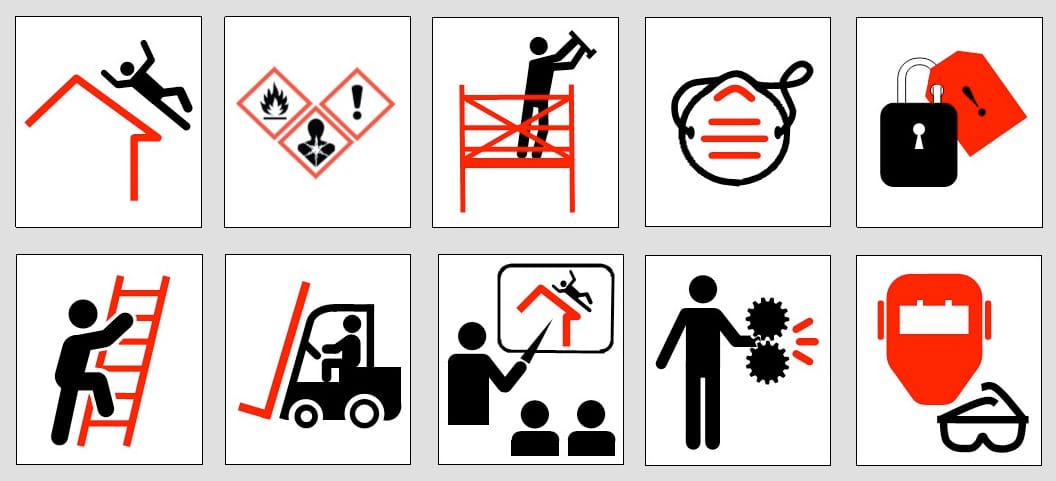
1. Fall Protection: Falls, primarily from ladders and roofs, accounted for 370 fatalities in 2021. Any time a worker is at a height of 4 feet or more (in California the requirement is 30 inches or more), the worker is at risk and needs to be protected.
2. Hazard Communication: Employers are required to provide a written Hazard Communication Program, label hazardous chemicals, provide a Safety Data Sheet for each chemical, and document employee training.
3. Ladders: Limit ladder use to ladder safety trained and experienced staff only. Secure ladders with a chain to prevent usage by untrained staff.
4. Respiratory Protection: Body shop employees need specific training both on written policies and on practices involving the use of respirators during auto refinishing operations. Training for respiratory protection, fit testing, user seal check, and respiratory cleaning procedures is mandatory, as is the OSHA Respirator Medical Evaluation Questionnaire. When an employee wears a respirator, information on proper usage, including limitations, must be provided even when it is not required under the regulation.
5. Scaffolding: Primarily applicable to the construction industry.
6. Lockout/Tagout: Specific procedures and practices safeguard employees from the unexpected energization or startup of machinery and equipment. A written program and annual employee training is mandatory. Employees working on automobiles must comply by isolating energy to the engine to prevent inadvertent movement during repair or service. A lockout kit including locks should be available for each piece of equipment/machinery.
7. Powered Industrial Trucks (Forklifts): The high number of fatalities associated with forklifts and high number of violations associated with powered industrial trucks tell us that many workers are not properly trained to safely drive potentially hazardous equipment. OSHA compliance requires training in these specific activities: forklift operations, loading and unloading, and vehicle maintenance. Evaluating each operator every three years is also mandatory.
8. Fall Protection Training Requirements: Dealerships must protect employees working on 2nd floor of the parts department, especially while loading/unloading parts at the mezzanine edge.
9. Eye & Face Protection: Reinforce your Person Protective Equipment (PPE) policy and ensure all employees wear eye and face protection as necessary.
10. Machine Guarding: Moving machine parts have the potential to cause severe workplace injuries, such as crushed fingers or hands, amputations, burns, or blindness. Safeguards, including anchoring machinery, are essential for protecting workers from these preventable injuries. Any machine part, function, or process that may cause injury must be safeguarded. When machine operation or accidental contact with the machine may injure the operator or others in the vicinity, hazards must be eliminated or controlled. Moving parts in automobiles, grinders, and brake lathes are all subject to this regulation.
| COMPLETE OSHA TRAINING ON THE WEB AT YOUR OWN PERILOSHA has stated repeatedly and consistently in its training-related interpretation letters that online or computer-based training is acceptable as part of an overall training program that includes hands-on, site-specific information and work practices where it is needed to meet workplace safety goals. Many online courses may not be legitimate. In many instances, the training company clearly states that the training does not meet any local, state, or federal standards. The awakening happens when OSHA audits the workplace and finds the employer lacking in hands-on, site-specific information and work practices. |
We discuss the hand-on element of some of the hands-on training requirements as follows:
1. Fall Protection: Employees must have hands-on training in using fall protection equipment such as harnesses. Also, the lanyards which automatically limit free fall distance are to be marked according to the actual edge. In summary, the training is hands-on and site-specific.
2. Forklift Training: Many employers are under the false assumption that the online training is sufficient for employees operating forklifts. Allowing a person who has completed only online training to operate a forklift is akin to driving an automobile after passing a written test. We all know that hands-on proficiency is to be shown before an actual driver’s license is granted. Some trainers will state in fine print that hands-on training is necessary, and some do not mention it all. An experienced trainer must provide training on the operation of the actual forklift and evaluate the employee on proficiency prior to providing an operator certification.
3. Lockout/Tagout (LOTO): A written program and employee training is mandatory along with the hands-on portion of lockout. An effective LOTO program requires that the employee must be able to show to the certifier that he possesses the tools and has procedural knowledge to effectively lockout and tagout the equipment, e.g., a faulty hoist.
4. Respiratory Protection: Each employee must be fit tested for the specific respirator to be worn by the employee. Respirator selection must be done by the employer based on the hazard to which the employee is/will be exposed. The SDS for the chemical being used must be utilized in the selection process. The employee should be given training on the respirator that must be worn during the work shift.
| Type of Violation | Penalty |
| Other-Than-Serious | $0 to $15, 625 per violation |
| Serious | $1,116 to $15, 625 violation |
| Failure to Abate | $15,625 per day beyond abatement date |
| Posting Requirements | $0 to $15,625 per violation |
| Willful or Repeated | $11,162 to $145,027 per violation |
*Note: The penalties are automatically adjusted for inflation on an annual basis and based on the number of employees.
DISCLAIMER: The contents of this newsletter are for informational purposes only and are not to be considered legal advice. Employers must consult their lawyer for legal matters and EPA/OSHA consultants for matters related to Environmental, Health & Safety. The article was authored by Sam Celly of Celly Services, Inc. who has been helping automobile dealers in Arizona, California, Hawaii, Idaho, Nevada, New Mexico, New York, Texas, and Virginia comply with EPA and OSHA regulations for over 35 years. Sam is a Certified Safety Professional (No. 16515) certified by the National Board of Certified Safety Professionals. Sam received his BE (1984) and MS (1986) in Chemical Engineering, followed by a J.D. from Southwestern University School of Law (1997). Sam is a member of the American Chemical Society (No. 31176063), American Industrial Hygiene Association (No. 124715), and National Association of Dealer Counsel (NADC). Sam also serves on the Board of Orange County American Industrial Hygiene Association and on CA Industrial Hygiene Council (CIHC). Our newsletters can be accessed at www.epaoshablog.com. We welcome your comments/questions. Please send them to sam@cellyservices.com.
 Celly Services Inc.